Chameleon Words in English: Master Noun–Verb–Adjective–Adverb Switch‑Hitters
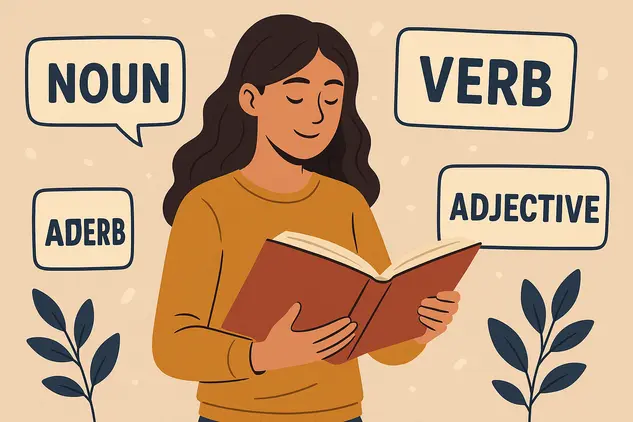
If you’ve ever paused over a word like record, present, or light and wondered, “What part of speech is this—right now?”, you’ve met one of English’s most useful quirks: chameleon words. These are words that change their function depending on context, serving as nouns, verbs, adjectives, or adverbs without changing spelling. Learn how they work, how to recognize their role instantly, and how to use them for clearer, more flexible writing.
What Are Words With Multiple Parts of Speech?
They are single words that can legitimately play more than one grammatical role. For example:
– Run can be a verb (I run daily) or a noun (I went for a run).
– Fast can be an adjective (a fast car), an adverb (she runs fast), a noun (a religious fast), or a verb (they fast on Fridays).
– Light can be a noun (turn on the light), a verb (light the candle), or an adjective (a light jacket).
Why English Lets Words Switch Roles
– Flexible word formation: English easily converts words without adding endings (a process called zero derivation). Nouns become verbs (to Google), verbs become nouns (a drive), and adjectives become nouns (the poor) with minimal fuss.
– Position matters more than form: Unlike languages that rely heavily on endings, English relies on word order and function words. Where a word sits in a sentence often determines its job.
– Long borrowing history: English has absorbed vocabulary from many languages. Over time, usage broadened and overlapped, creating multi-role words.
How To Tell a Word’s Part of Speech in Real Time
Use these quick checks as you read or write.
1) Position test (where is it?):
– Before a noun: likely an adjective (a present danger).
– After an article or determiner (a, an, the, this): likely a noun (the present).
– After a subject and before an object: likely a verb (They present evidence).
– Modifying a verb/adjective/another adverb: likely an adverb (She spoke close; surprisingly fast).
2) Substitution test (what could replace it?):
– If you can replace it with a typical noun (thing, event) and the sentence still works, it’s acting as a noun.
– If you can replace it with a typical verb (do, perform, be), it’s a verb.
– If you can replace it with a typical adjective (big, quick), it’s an adjective.
– If you can replace it with a typical adverb (quickly, very), it’s an adverb.
3) Morphology clues (endings and forms):
– Verb markers: -s (walks), -ed (walked), -ing (walking). Note: not always visible (set, cut).
– Noun markers: plurals (-s, -es) or possession (’s). Example: two runs, the light’s glare.
– Adjective markers: comparative/superlative (-er, -est) or can take very. Example: lighter, very light.
– Adverb markers: often -ly, but many adverbs lack -ly (fast, hard, late, near).
4) Companion words (who hangs out nearby?):
– Prepositions often introduce nouns (in the light, during the fast).
– Linking verbs (be, seem, become) often connect to adjectives (is present, became clear).
– Direct objects follow transitive verbs (present evidence, record data).
5) Pronunciation stress for heteronyms (same spelling, different stress):
– REcord (noun) vs reCORD (verb)
– PREsent (noun/adj) vs preSENT (verb)
Common Chameleon Words With Clear Examples
Use these mini-lists to see how role-switching works.
Fast
– Adjective: a fast runner
– Adverb: she drives fast
– Noun: they observed a 24‑hour fast
– Verb: some people fast during Ramadan
Light
– Noun: the light was dim
– Verb: please light the candle
– Adjective: a light bag
Present
– Noun: live in the present
– Adjective: all members were present
– Verb: they will present the findings
Record
– Noun: she broke the record (REcord)
– Verb: please record this note (reCORD)
Clean
– Adjective: clean water
– Verb: clean the kitchen
– Adverb (informal/AmE sport): he hit it clean
– Noun (less common): a clean in weightlifting
Right
– Adjective: the right answer
– Adverb: turn right here
– Noun: human rights matter
– Verb (less common): to right a wrong
Close
– Adjective: a close friend
– Adverb: stay close
– Verb: please close the door (pronounced with a z sound)
– Noun (less common): the market’s close
Open
– Adjective: an open door
– Verb: open the file
– Noun: the French Open
Well
– Adverb: she writes well
– Adjective: feeling well today
– Noun: a water well
– Interjection: Well, let’s begin.
Back
– Noun: my back hurts
– Verb: back the car up
– Adjective: back issues of the magazine
– Adverb: go back home
Like
– Verb: I like coffee
– Preposition: looks like rain
– Conjunction (informal): do it like I showed you
– Noun (informal/social): she got many likes
– Adjective (informal): it’s very like him to help
Hard
– Adjective: hard work
– Adverb: work hard
Late
– Adjective: the late actor; a late bus
– Adverb: we arrived late
Early
– Adjective: an early flight
– Adverb: arrive early
Near
– Preposition: sit near me
– Adjective: the near side
– Adverb: come near
– Verb (formal/literary): the ship neared land
Long
– Adjective: a long road
– Adverb: stay long?
– Verb (to yearn): I long for spring
Short
– Adjective: a short break
– Adverb: cut it short
– Noun: go long or short (finance)
– Verb (finance): to short a stock
Fair
– Adjective: a fair decision
– Adverb: play fair
– Noun: a county fair
Fine
– Adjective: a fine idea
– Adverb (informal): that’ll do fine
– Noun: pay a fine
– Verb: to fine a driver
Clear
– Adjective: clear instructions
– Adverb: stand clear
– Verb: clear the table
Sound
– Noun: the sound of rain
– Verb: sound the alarm
– Adjective: sound reasoning
Square
– Noun: meet at the square
– Verb: square the numbers
– Adjective: a square table
– Adverb (AmE, boxing/baseball): hit it square
Key
– Noun: house keys; key of C
– Verb: key in your code
– Adjective: a key decision
Kind
– Noun: a rare kind of orchid
– Adjective: a kind neighbor
Match
– Noun: a soccer match; a box of matches
– Verb: the color will match
Drive
– Verb: drive carefully
– Noun: a long drive
– Adjective (attributive): drive time, drive system
Walk
– Verb: we walk daily
– Noun: take a walk
– Adjective (attributive): a walk score, walk signal
Drink
– Verb: drink water
– Noun: a cold drink
– Adjective (attributive): drink menu
Watch
– Verb: watch the show
– Noun: a new watch
Present vs. Gift vs. Present (verb):
– Noun: a birthday present (gift)
– Verb: they present an award
– Adjective: she was present at the meeting
Phrasal Verbs and Fixed Phrases That Add Clarity
– Back up vs. backup: Back up your files (verb phrase) vs. make a backup (noun/adjective).
– Log in vs. login: Log in to the portal (verb phrase) vs. your login details (noun/adjective).
– Checkout vs. check out: Check out at the front (verb) vs. the checkout counter (noun).
Hyphenation and spacing often signal part of speech in modern usage.
Practical Tips to Master Multi‑Role Words
– Read the neighborhood: Look one or two words to the left and right. Determiners (a, the, this), prepositions (of, in, to), and auxiliaries (will, have, be) offer strong clues.
– Try the swap test: Replace the mystery word with do (verb), thing (noun), quick (adj), or quickly (adv). If the sentence still works, you’ve found the role.
– Spot endings and forms: Plurals and apostrophes tilt toward nouns; -ing and -ed forms often tilt toward verbs; -er/-est toward adjectives.
– Listen for stress: Heteronyms like REcord vs reCORD, CONtract vs conTRACT, and INcrease vs inCREASE reveal function by stress.
– Use hyphens to avoid ambiguity: a well-known writer (adjective) vs. the writer is well known (adjective phrase); small-business owners vs. small business owners (two meanings!).
– Mind adverbs without -ly: fast, hard, late, near, right, wrong can act adverbially. Don’t force an -ly where it doesn’t belong (drive fast, not fastly).
– Watch for linking verbs: After be, seem, become, feel, look, taste, and sound, an adjective typically follows (the soup smells good, not well, unless you mean healthy).
– Build example banks: For each tricky word you meet, jot one sentence for each role. Reuse them when you speak or write.
– Check reputable dictionaries: Many entries label parts of speech separately and include usage notes and pronunciation for stress-shift pairs.
– Practice deliberately: Read a short article and label five chameleon words you find. Then rewrite one sentence swapping the role (e.g., change a noun to a verb) to feel how syntax changes.
Mini Quiz (Answers Below)
Identify the part of speech of the bolded word in each sentence.
1) We will present our plan tomorrow.
2) Her back still hurts after the move.
3) Please record the meeting.
4) The team made a strong finish.
5) They plan to fast before the test.
6) Turn right at the next light.
7) This data looks clean now.
8) We’ll check out at the self‑checkout.
Answers
1) Verb (present)
2) Noun (back)
3) Verb (record)
4) Noun (finish)
5) Verb (fast)
6) Adverb (right)
7) Adjective (clean)
8) Verb phrase (check out) and noun (checkout)
Common Pitfalls (and How To Avoid Them)
– Forcing -ly adverbs: Not all adverbs take -ly. Accept fast, hard, late, near as adverbs when they modify verbs directly.
– Confusing well vs. good: After linking verbs about health, well is typically an adjective meaning healthy (I feel well). With senses, adjectives are preferred (the soup tastes good).
– Missing stress cues: For stress-shift pairs, practice aloud. Say REcord vs reCORD, PREsent vs preSENT, CONduct vs conDUCT.
– Skipping hyphens: Hyphens often prevent misreading (small-business owners vs small business owners). If it modifies a noun as a single idea before the noun, hyphenate.
– Ignoring register: Some roles are informal (like as a conjunction). In formal writing, use as or as if instead.
Why Mastering These Words Improves Your English Fast
– Clarity: You’ll avoid awkward phrasing and choose the exact role you need.
– Brevity: Convert verbs to nouns (or vice versa) to tighten or expand meaning as needed.
– Reading speed: Quick identification of function reduces confusion and re‑reading.
– Style range: Switching roles lets you vary rhythm and emphasis (The launch was a success vs We launched successfully).
A Stronger Conclusion: Make Chameleon Words Your Advantage
English is rich precisely because so many words can flex. Instead of seeing that flexibility as confusing, treat it as a toolkit. The more you notice position, companions, endings, and stress, the faster you’ll pin down a word’s job—even when the spelling doesn’t change. Build your own mini‑dictionary with examples for each tricky word you meet. Practice the swap test in your drafts. Read your sentences aloud to catch stress cues and natural flow.
Do this consistently for two weeks and you’ll feel a tangible shift: cleaner sentences, quicker comprehension, and the confidence to use chameleon words on purpose—not by accident. That’s the difference between merely learning English and mastering it.
Action Steps You Can Take Today
– Pick five chameleon words from this article (e.g., present, record, light, fast, clear). Write one sentence for each as a noun, verb, and adjective/adverb where possible.
– Revisit a recent email or paragraph. Replace one noun with a verb form (make a decision → decide) and one verb with a noun form (we improved → our improvement). Compare tone and clarity.
– Read a news story and circle any REcord/reCORD‑type words. Mark stress and label each part of speech.
Keep this guide handy. With practice, you’ll recognize and deploy multi‑part‑of‑speech words instinctively—the mark of confident, modern English.