Adverbial Conjunctions Made Easy: Rules, Real Examples, and Pro Tips for Clearer Writing
What are adverbial conjunctions?
Adverbial conjunctions—more commonly called conjunctive adverbs—are transition words that connect ideas between independent clauses, sentences, or paragraphs while showing relationships such as cause and effect, contrast, sequence, emphasis, or comparison. Common examples include however, therefore, moreover, consequently, meanwhile, nevertheless, thus, and similarly.
Quick takeaway
– Use them to link complete ideas and show logic: contrast, cause, sequence, etc.
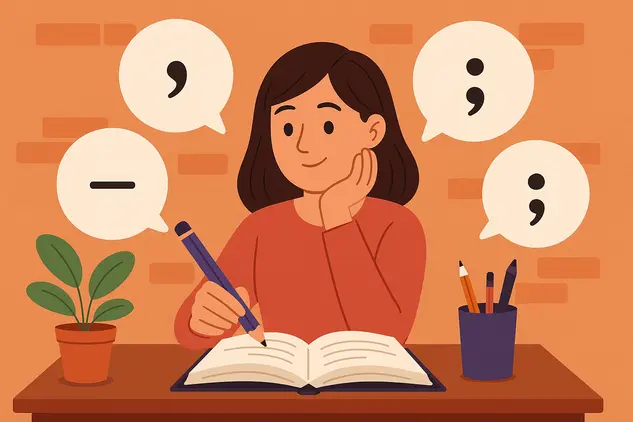
– When they join two independent clauses, use a semicolon before and a comma after: Independent clause; however, independent clause.
– At the start of a sentence, follow with a comma: However, the team met its deadline.
– Do not use only a comma to join two sentences with a conjunctive adverb (that’s a comma splice).
Why they matter
Adverbial conjunctions make writing flow. They act like signposts that tell readers why one sentence follows another—whether you’re adding a point, drawing a contrast, or concluding an argument. In professional, academic, and web content, these transitions are essential for clarity and scanability.
Core punctuation patterns
1) Joining independent clauses
– Pattern: Clause 1; conjunctive adverb, clause 2.
– Example: Sales dipped in Q2; however, demand rebounded in Q3.
2) Starting a sentence
– Pattern: Conjunctive adverb, clause.
– Example: Therefore, we will expand the pilot to three additional markets.
3) Mid-sentence interrupter
– Pattern: Clause, conjunctive adverb, phrase/clause.
– Example: The proposal, moreover, addresses long-term staffing.
4) After a period
– Pattern: Clause. Conjunctive adverb, clause.
– Example: The first draft is complete. Nevertheless, we’ll run a final fact check.
Common functions and examples
Addition
– moreover, furthermore, besides, also
– Examples:
– The app is fast; moreover, it consumes less battery.
– The guide is comprehensive. Furthermore, it includes worksheets.
Contrast or concession
– however, nevertheless, nonetheless, still, instead, conversely, on the other hand
– Examples:
– We expected a slowdown; however, the launch exceeded forecasts.
– The feature looked promising; nevertheless, user testing revealed confusion.
Cause and effect
– therefore, thus, hence, consequently, accordingly, as a result
– Examples:
– Support tickets spiked; consequently, we extended chat hours.
– The sample size doubled; therefore, the estimate is more reliable.
Sequence and time
– meanwhile, afterward, subsequently, then, finally, next
– Examples:
– The dev team fixed the bug; meanwhile, QA updated the test plan.
– We ran the pilot; subsequently, the board approved the rollout.
Comparison and similarity
– similarly, likewise
– Examples:
– The marketing team cut costs by 10%; similarly, sales trimmed travel expenses.
– The iOS app improved retention; likewise, Android saw gains.
Emphasis and clarification
– indeed, in fact, namely, specifically
– Examples:
– The risks are significant; indeed, they could delay the timeline.
– We saw growth in multiple regions; specifically, the Midwest led the surge.
Condition or alternative
– otherwise
– Example:
– Submit the form today; otherwise, you’ll miss the early-bird rate.
Summary
– overall, in sum, in conclusion
– Examples:
– The data are mixed; overall, the trend points upward.
– We tested three prototypes; in sum, Model B performed best.
Examples in action: wrong vs. right
– Wrong: The site is faster, however the images still lag.
– Right: The site is faster; however, the images still lag.
– Wrong: We pushed a fix, therefore revenue will recover.
– Right: We pushed a fix; therefore, revenue will recover.
– Wrong: The team met the goal, nevertheless we’re pausing hiring.
– Right: The team met the goal; nevertheless, we’re pausing hiring.
– Right (period + starter): The team met the goal. Nevertheless, we’re pausing hiring.
Adverbial conjunctions vs. other connectors
– Conjunctive adverbs (however, therefore, moreover) link ideas and require semicolon/comma when joining independent clauses.
– Coordinating conjunctions (for, and, nor, but, or, yet, so) connect words, phrases, and independent clauses with a comma: We tested twice, but the error persisted.
– Subordinating conjunctions (because, although, since, when) create dependence and don’t use a semicolon: Because demand fell, we delayed the launch. We delayed the launch because demand fell.
Special notes about however and then
– However as contrast (conjunctive adverb) takes punctuation: The plan is sound; however, funding is uncertain.
– However meaning “to whatever extent” is not a conjunctive adverb and doesn’t take commas: However you look at it, the math checks out.
– Then can be a simple adverb of time or a conjunctive adverb showing sequence. When it connects two independent clauses as a transition, treat it like other conjunctive adverbs: We closed the beta; then, we invited waitlisted users.
Editing checklist for error-free transitions
– Can each side stand alone as a sentence? If yes, use a semicolon + comma with the conjunctive adverb, or use a period and start a new sentence.
– Is the adverb at the beginning of a sentence? Follow it with a comma in most cases (However, Therefore, Meanwhile, etc.).
– If it interrupts the sentence, set it off with commas (or, for stronger emphasis, en dashes).
– Avoid comma splices: don’t join two sentences with a comma plus a conjunctive adverb.
– Don’t overuse any single transition. Vary them to match the logic: contrast vs. cause vs. sequence.
– Keep tone in mind. Indeed and moreover can sound formal; meanwhile and then are more neutral.
– Read aloud. If the pause feels natural where you’ve placed the comma, you’re likely punctuating correctly.
Practical tips for stronger, more discoverable writing
– Map the relationship first. Before choosing a word, decide: Are you adding, contrasting, explaining cause, or summarizing? Then pick a transition that signals that logic.
– Prefer precision over habit. If you write “however” by default, try instead, conversely, or nevertheless when they fit better.
– Use a period when in doubt. You can always write: The market softened. Therefore, we adjusted pricing.
– Keep it scannable. In web articles, start new paragraphs with clear transitions so skimmers can follow the argument.
– Limit transitions to one per sentence. Doubling up (However, therefore, …) slows readers and muddies logic.
– Watch register. In technical or academic work, therefore, consequently, and thus often read cleaner than so.
– Build a reusable list. Keep a short, organized set of go-to transitions by function so your usage stays consistent across documents.
– Optimize for snippets. For SEO and Discover, write the first sentence of a paragraph so it stands alone. A clear conjunctive adverb at the start can make that sentence snippet-ready.
Mini reference: quick patterns
– Clause; therefore, clause.
– Clause. However, clause.
– The plan, moreover, includes contingencies.
– Clause; meanwhile, clause.
– In sum, clause.
Practice: rewrite these
– I finished the draft, I still need to source images. (Target: contrast)
– Sample fix: I finished the draft; however, I still need to source images.
– We launched the update, users reported fewer crashes. (Target: cause/effect)
– Sample fix: We launched the update; consequently, users reported fewer crashes.
– The webinar filled up, we added a second session. (Target: sequence)
– Sample fix: The webinar filled up; subsequently, we added a second session.
Frequently asked questions
– Is so a conjunctive adverb? In most style guides, so is a coordinating conjunction when it means “therefore.” If you want the conjunctive-adverb structure, use therefore, thus, or consequently.
– Do I always need a semicolon? Only when a conjunctive adverb directly joins two independent clauses. If you start a new sentence with the adverb, use a period before it and a comma after it.
– Can I use them in casual writing? Yes, but match tone. However and consequently can feel formal in text messages; meanwhile and then are lighter.
– Are there exceptions to the comma after the adverb? Short adverbs like then or thus may omit the comma in very concise sentences if no ambiguity results. When in doubt, include it.
Stronger conclusion
Adverbial conjunctions are small words with big jobs. They clarify the link between your ideas, guide readers through your logic, and make paragraphs flow—especially online, where attention is scarce. If you remember just three rules, you’ll avoid 95% of mistakes: use a semicolon plus a comma when joining two sentences; add a comma when you start a sentence with the adverb; and choose the transition that actually matches your relationship (contrast, cause, sequence, summary). Master those, and your writing won’t just be grammatically correct—it will be easier to skim, more persuasive, and more likely to earn clicks, shares, and placements in Google Discover.
Key terms at a glance
– adverbial conjunction = conjunctive adverb
– semicolon before, comma after when joining two independent clauses
– common set: however, therefore, moreover, consequently, meanwhile, nevertheless, thus, similarly, instead, otherwise, accordingly, besides, likewise, indeed, still, then, finally
If you’re short on time, start by replacing overused however with a targeted alternative (nevertheless for concession, instead for replacement, conversely for opposition). Then review one page of your writing and fix any comma splices by either (a) adding a semicolon and a conjunctive adverb or (b) splitting into two sentences. Those two moves alone will immediately tighten your prose and improve readability for search and social surfaces alike.