What Is Fibromyalgia? Symptoms, Causes, and Treatment Options
What Is Fibromyalgia? Symptoms, Causes, and Treatment Options
Fibromyalgia is a long-term condition that can affect how the body processes pain, often leading to widespread aches, fatigue, poor sleep, and difficulty concentrating. While it is not life-threatening, it can have a major impact on day-to-day life, work, mood, and overall wellbeing. Health authorities such as the NHS, Mayo Clinic, and NIAMS note that fibromyalgia has no cure at present, but symptoms can often be managed with a combination of treatment, lifestyle changes, and ongoing support.
What is fibromyalgia?
Fibromyalgia is a chronic pain disorder. People with this condition typically experience widespread musculoskeletal pain, along with other symptoms such as tiredness, sleep problems, and issues with memory or concentration. Researchers believe it is linked to the way the brain and nervous system process pain signals, which may make the body more sensitive to pain.
Fibromyalgia can affect adults and, less commonly, younger people as well. It is seen more often in women than in men, and it is most frequently diagnosed in adulthood.
What causes fibromyalgia?
The exact cause of fibromyalgia is still not fully understood. However, experts believe it is likely linked to a combination of biological, psychological, and environmental factors. In many people, symptoms begin after a physically or emotionally stressful event, while in others they develop gradually without a single clear trigger.
Several factors may play a role:
Genetics
Fibromyalgia can run in families, suggesting that some people may inherit a greater tendency to develop the condition.
Infections
Certain infections may trigger symptoms or make them worse in some individuals.
Physical or emotional trauma
A serious injury, surgery, major emotional stress, or traumatic experience may sometimes precede the onset of fibromyalgia.
Changes in pain processing
One of the leading theories is that the nervous system becomes more sensitive to pain, so normal sensations may be felt as painful or painful sensations may feel more intense than they should.
Sleep problems and stress
Poor sleep and ongoing stress are both closely associated with fibromyalgia and may worsen flare-ups over time.
Common symptoms of fibromyalgia
Symptoms can vary from person to person, and they may come and go. Some people have periods when their symptoms improve, followed by flare-ups when pain and fatigue become harder to manage.
The most common symptoms include:
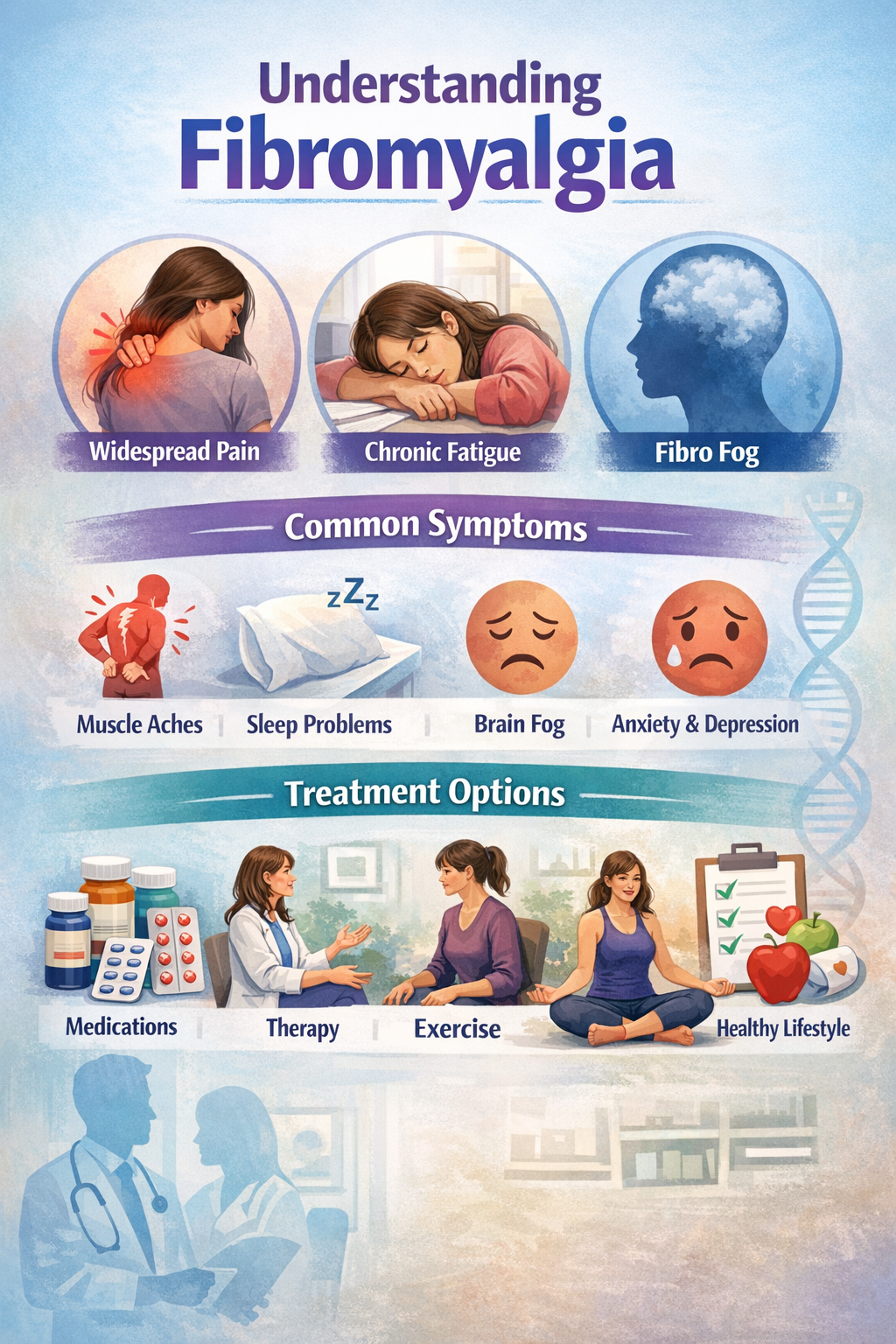
Widespread pain
This is the hallmark symptom of fibromyalgia. The pain is often described as a constant dull ache affecting multiple areas of the body, rather than a single joint or muscle group.
Fatigue
Many people with fibromyalgia feel exhausted even after what should have been a full night’s sleep. The tiredness can be persistent and severe enough to interfere with daily functioning.
Sleep disturbances
Sleep is often unrefreshing. Some people have trouble falling asleep, wake up frequently during the night, or feel worse in the morning. Fibromyalgia may also overlap with other sleep disorders, including restless legs syndrome and sleep apnoea.
Cognitive difficulties
People sometimes describe “fibro fog” — trouble with memory, focus, mental clarity, or finding the right words.
Mood and mental health symptoms
Anxiety, low mood, and depression may occur alongside fibromyalgia, particularly because chronic pain and poor sleep can take a heavy emotional toll.
Because these symptoms can affect physical health, emotional wellbeing, and quality of life, it is important to speak to a GP or healthcare professional if you think fibromyalgia may be the cause. There is no single test for fibromyalgia, so diagnosis is usually based on symptoms, medical history, and ruling out other possible conditions.
How is fibromyalgia treated?
There is currently no cure for fibromyalgia. Treatment focuses on reducing symptoms, improving daily function, and helping people manage the condition more effectively over time. Most experts recommend a combination approach rather than relying on one treatment alone.
1. Medication
Medicines may help some people manage pain, sleep issues, or related mood symptoms. Depending on the individual case, a doctor may consider:
- pain-relieving medication,
- certain antidepressants,
- anti-seizure or nerve-pain medicines such as pregabalin, and
- other symptom-based treatments when appropriate.
Not every medicine works for every person, and treatment often needs to be adjusted over time.
2. Talking therapies
Psychological support can be a valuable part of treatment. Cognitive behavioural therapy, often called CBT, may help people better cope with chronic pain, reduce stress, and improve emotional resilience. Other supportive approaches, including acceptance-based therapies, may also be useful.
3. Exercise and movement-based therapies
Gentle, consistent movement is widely recommended for fibromyalgia. While starting exercise can feel uncomfortable at first, regular activity often helps reduce pain and improve function over time. Examples include walking, stretching, swimming, hydrotherapy, yoga, and tai chi.
4. Self-management and lifestyle support
Long-term symptom control usually depends on daily habits as much as formal treatment. Sleep care, pacing activities, stress reduction, and physical activity all matter.
Practical tips for living with fibromyalgia
If you are being treated for fibromyalgia, the following habits may help support your recovery and make flare-ups easier to manage:
Follow your treatment plan
Work closely with your doctor or healthcare team. Fibromyalgia often requires an individualised plan based on your symptoms, lifestyle, and response to treatment.
Eat a balanced diet
There is no single “fibromyalgia diet,” but a nutritious, balanced eating pattern can support energy levels and overall health. Many people benefit from eating regularly, staying hydrated, and limiting excess alcohol.
Stay active
Low-impact exercise is one of the most consistently recommended strategies for fibromyalgia. Start slowly and build up gently to avoid overexertion.
Prioritise sleep
Try to keep a regular sleep schedule, reduce late-night stimulation, and build habits that support deeper, more restorative sleep. Poor sleep can make pain and fatigue worse.
Reduce stress
Stress can aggravate symptoms, so relaxation techniques may help. Breathing exercises, mindfulness, meditation, and setting realistic daily limits can all be useful.
Make space for rest
Living with chronic pain can be draining. Rest is important, but so is finding a healthy balance between activity and recovery. Learning to pace yourself is often key.
When to seek medical advice
You should speak to a healthcare professional if you have ongoing widespread pain, persistent fatigue, poor sleep, or concentration problems that are affecting your quality of life. These symptoms can overlap with many other conditions, so proper assessment matters.
Final thoughts
Fibromyalgia is a complex chronic condition that affects far more than just muscles and joints. It can influence sleep, mood, concentration, and the ability to manage everyday life. Although there is no cure, many people can improve their symptoms with the right combination of medical care, exercise, talking therapy, and self-management strategies.