Itchy Skin: Causes, Symptoms, and When to Get Help
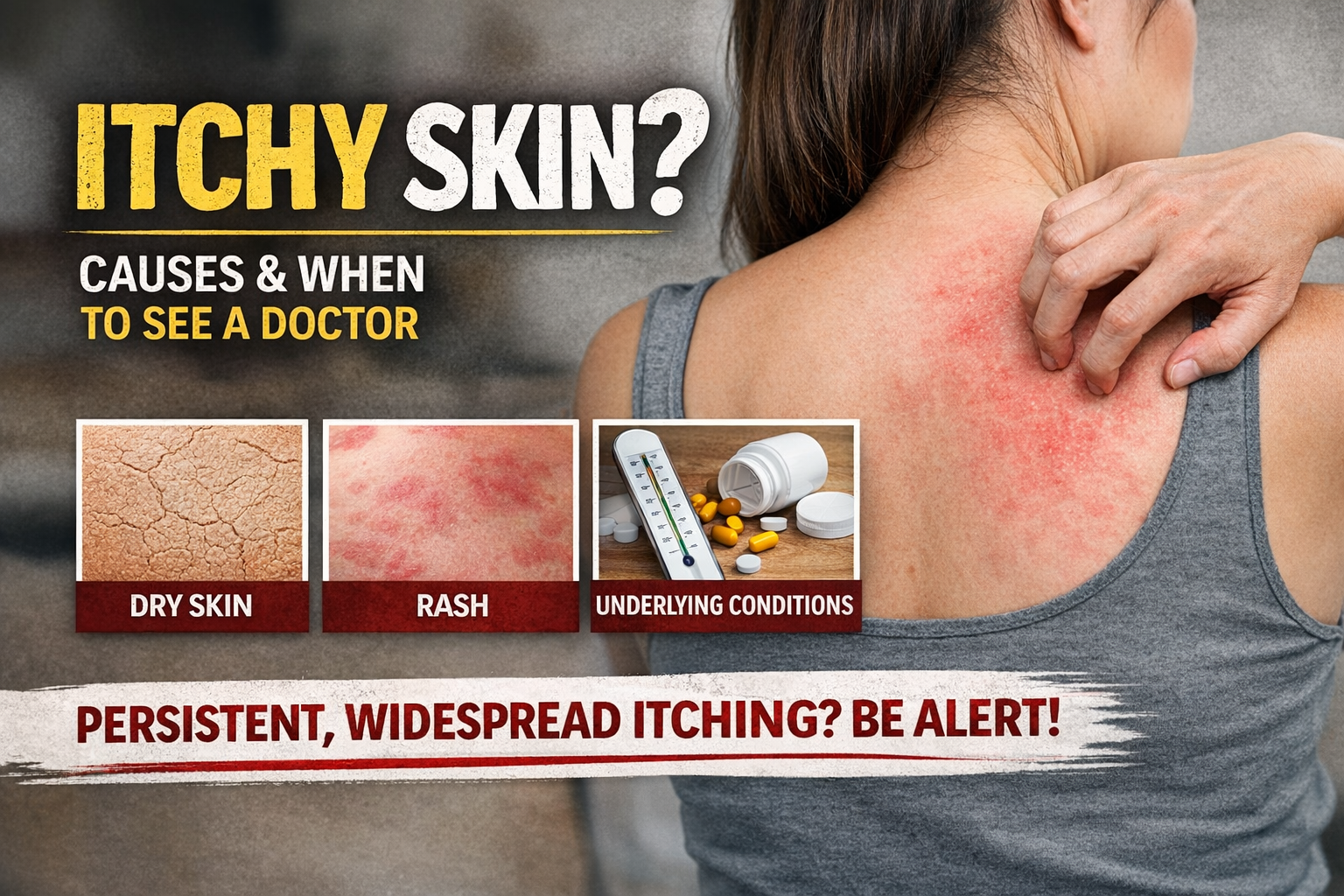
Itchy skin is one of the most common skin complaints in adults. In many cases, it is linked to dry skin, irritation, or a mild rash. But sometimes itching lasts longer, affects large areas of the body, or happens with other symptoms that deserve medical attention.
Because itchy skin can have many causes, it helps to think of it as a symptom, not a diagnosis. The key question is not just “How do I stop scratching?” but also “What may be triggering the itch in the first place?”
- Itchy skin, or pruritus, is a symptom that may come from dry skin, skin disorders, irritation, allergies, medications, nerve issues, or internal health conditions.
- Itching can happen with or without a visible rash, so normal-looking skin does not always rule out a medical cause.
- Scratching may briefly feel helpful but often worsens the cycle, leading to more irritation, broken skin, or infection.
- General skin care habits such as moisturizing, gentle cleansing, and avoiding triggers may help reduce mild itching.
- Medical evaluation is important if itching is severe, lasts more than a couple of weeks, affects sleep, involves the whole body, or comes with symptoms such as fever or unexplained weight loss.
What itchy skin means
Itchy skin is the uncomfortable sensation that creates the urge to scratch. The medical term for this is pruritus. Some people feel it as tingling, crawling, stinging, or irritation rather than a simple “itch.”
This symptom can affect a small area, such as the scalp, hands, or legs. It can also affect broad areas or even the entire body. That difference matters, because localized itching and widespread itching do not always point to the same causes.
Itchy skin is a symptom, not a single condition
Many people use “itchy skin” as if it were a diagnosis. In reality, it is more like a warning signal from the skin or the nervous system. The source may be simple, such as dry air or harsh soap. In other cases, it may reflect eczema, hives, a medication reaction, or a health issue not limited to the skin.
That is why two people with the same symptom may need very different explanations and care plans.
Localized itch and whole-body itch
A small itchy patch may be related to a local trigger, such as irritation, an insect bite, a rash, or contact with something that bothered the skin. Whole-body itching, especially if there is no obvious rash, can sometimes suggest a broader issue and is more likely to need medical evaluation.
Still, there is overlap. A mild-looking problem can feel intense, and a serious cause does not always look dramatic on the skin.
Why the skin feels itchy
Itching happens when the skin and nerves send signals to the brain. These signals may be triggered by dryness, inflammation, allergic reactions, irritation, or changes in how the nervous system processes sensation.
In simple terms, the body treats certain skin changes as something that needs attention. The result is the urge to scratch.
How the itch signal works
The outer layer of skin acts as a barrier. When that barrier becomes dry, inflamed, or damaged, the skin can become more sensitive. Nerve endings in the skin respond to that irritation and send messages upward.
This helps explain why very different causes can all produce a similar feeling. Dry skin, eczema, a healing scar, and a medication reaction may look different, but each can trigger itch pathways.
Why scratching can make itching worse
Scratching may bring a few seconds of relief. But it can also increase inflammation, damage the skin barrier, and activate more itch signaling. This creates the familiar itch-scratch cycle.
Over time, repeated scratching can make skin thicker, rougher, and more sensitive. In some people, this cycle becomes one of the main reasons the problem continues.
Common causes and who is more likely to develop it
Itchy skin does not have one single cause. A practical way to understand it is to group causes into several broad categories.
Dry skin and common skin conditions
Dry skin is one of the most frequent explanations, especially in colder weather, low-humidity environments, or with aging. Skin naturally tends to become drier over time, which is one reason older adults often report more itching.
Common skin-related causes include:
- Dry skin
- Eczema or dermatitis
- Psoriasis
- Hives
- Scabies or other infestations
- Insect bites
- Burns or healing scars
These conditions may produce redness, bumps, scaling, cracks, or patches of skin that look rough or thickened.
Irritants, allergies, bites, and medication reactions
Sometimes the issue is not a disease but a trigger coming from outside the body. The skin may react to soaps, fragrances, detergents, wool, cosmetics, or certain chemicals.
Allergic reactions can also cause itching, often with a rash. Poison ivy is one well-known example, but many substances can trigger a similar response in sensitive individuals.
Some medicines may contribute to itching as well. In some cases, the reaction includes a rash. In others, itching may happen with little or no visible skin change.
Internal health conditions that may be linked to itching
Whole-body itching may sometimes be associated with an internal medical condition. Examples can include:
- Liver disease
- Kidney disease
- Anemia
- Diabetes
- Thyroid disorders
- Certain cancers
This does not mean itching usually signals a serious disease. Most itching is not caused by cancer or another severe illness. But unexplained, generalized, or persistent itching deserves attention because it occasionally points to something beyond the skin.
Nerve-related and mental health-related causes
The nervous system also plays a role. Conditions such as shingles, pinched nerves, or multiple sclerosis may be linked to itching in some cases.
Mental health conditions do not “fake” itch, but they can affect how itch is perceived, amplified, or maintained. Anxiety, depression, and obsessive-compulsive symptoms may interact with chronic itching, especially when scratching becomes repetitive and hard to control.
Risk factors that can make itching more likely
Anyone can develop itchy skin, but some factors make it more common:
- Older age
- Existing skin disorders
- Medical conditions associated with dryness or inflammation
- Low humidity or frequent hot bathing
- Repeated exposure to irritating products
- A history of allergies or sensitive skin
The more of these factors a person has, the more likely it becomes that itching will be ongoing rather than occasional.
What symptoms to notice
Not all itching looks the same. Paying attention to patterns can help people describe symptoms more clearly when seeking care.
Itching with visible skin changes
Some people notice itching along with:
- Red or inflamed skin
- Scratch marks
- Small bumps
- Blisters
- Dry, cracked skin
- Scaly or leathery patches
These changes may reflect inflammation, dryness, irritation, allergy, or infection. They can also develop partly because of scratching, even if scratching was not the original cause.
Itching without an obvious rash
Sometimes skin looks nearly normal even when the itch feels intense. This can happen with dry skin, medication-related itch, early skin disease, nerve-related causes, or some internal conditions.
This pattern can be frustrating because the symptom feels real but is harder to “see.” It is one reason duration, location, and associated symptoms matter so much.
Clues in timing, location, and severity
A few details may help make the picture clearer:
- Nighttime itching: may be more noticeable because there are fewer distractions, though some conditions also worsen at night.
- Scalp-only itching: may suggest local skin or hair-product issues.
- Leg itching in older adults: often relates to dryness.
- Whole-body itching: deserves closer attention, especially when persistent.
- Sudden unexplained itch: may need evaluation if there is no obvious trigger.
- Sleep-disrupting itch: is more than a minor annoyance and can strongly affect health and quality of life.
These clues do not diagnose the cause, but they are useful in deciding whether self-care is reasonable or whether medical advice is needed.
What can happen if itching is ignored
Many episodes of mild itching resolve without major consequences. But severe or chronic itching can take a real toll.
Skin injury, infection, and thickened skin
Repeated scratching can break the skin, which raises the risk of bleeding, irritation, and infection. In some cases, the skin becomes thicker and tougher from ongoing rubbing or scratching.
Once the skin barrier is damaged, the area may sting more, itch more, and heal more slowly. This can turn a temporary problem into a longer one.
Sleep disruption and emotional strain
Chronic itching is not only a skin issue. It can interrupt sleep, reduce concentration, and affect mood. Some people become anxious about the symptom itself, while others feel worn down by the constant urge to scratch.
Over time, itching can lower quality of life in ways that are easy to underestimate from the outside.
Everyday habits that may help prevent or reduce itching
For mild itching, general skin care may help support the skin barrier and reduce irritation. These steps are not a substitute for diagnosis, but they are often a reasonable starting point.
Support the skin barrier
Moisturizing regularly may help reduce dryness-related itch. Many people do best when moisturizer is applied soon after bathing, while the skin is still slightly damp.
Other helpful habits include:
- Use gentle, fragrance-free cleansers when possible
- Avoid very hot showers or baths
- Pat skin dry instead of rubbing it harshly
- Reapply moisturizer to dry-prone areas as needed
The goal is not to “seal in” every possible cause of itching, but to reduce unnecessary barrier damage.
Reduce triggers in daily life
Small environmental changes may also help:
- Wear soft, non-irritating fabrics if wool or rough fibers make symptoms worse
- Use mild laundry products when fragranced detergents seem irritating
- Keep indoor air from becoming excessively dry if possible
- Try to notice whether certain cosmetics, soaps, or topical products make itching worse
These changes are supportive, not curative. If the underlying problem is eczema, psoriasis, scabies, or an internal illness, habits alone may not fully solve it.
When self-care is reasonable to try
Self-care may be a reasonable first step when itching is:
- Mild
- Clearly linked to dryness or a known trigger
- Limited to a small area
- Not accompanied by concerning symptoms
- Improving over time
If symptoms continue or worsen despite these efforts, it is sensible to seek medical advice rather than trying more and more products.
When to see a doctor or seek urgent care
A simple rule is that itching deserves medical attention when it is persistent, intense, widespread, unexplained, or affecting daily life.
Consider booking a medical visit if:
- It lasts more than two weeks
- It does not improve with basic self-care
- It is severe enough to interfere with normal activities
- It disrupts sleep
- It begins suddenly without an obvious explanation
- It affects the whole body
- It keeps returning
A clinician may look for skin disease, medication-related causes, or signs of an internal condition depending on the pattern.
Seek more prompt medical attention if itching comes with:
- Fever
- Unexplained weight loss
- Night sweats
- Signs of skin infection, such as increasing redness, warmth, swelling, or drainage
- Extensive rash or rapidly worsening symptoms
These features do not automatically mean something serious is happening, but they raise the need for professional evaluation.
If itching continues for months despite treatment attempts, specialist assessment, often from a dermatologist, may be appropriate.
Common myths about itchy skin
Misunderstandings about itching can delay care or lead to habits that make the problem worse.
Myth: “If there is no rash, it cannot be important”
Not true. Itching can happen even when skin looks mostly normal. Dry skin, medication reactions, nerve-related causes, and some internal conditions may not produce a dramatic rash.
Myth: “Itching always means allergy”
Allergy is only one possible explanation. Dry skin, eczema, psoriasis, scabies, medication effects, and non-skin medical conditions can also cause itching.
Myth: “Scratching helps solve the problem”
Scratching may briefly reduce discomfort, but it often worsens irritation and prolongs the cycle. Relief that lasts usually comes from addressing the cause and protecting the skin barrier.
Myth: “Itchy skin is just a minor annoyance”
Sometimes it is mild and temporary. But chronic itching can interfere with sleep, mood, concentration, and skin health. That impact is real, even when the skin changes look modest.
The bottom line
Itchy skin is common, and in many cases the cause is relatively simple, such as dryness or irritation. But the symptom is broad, and sometimes it reflects an underlying skin condition, a reaction to something in the environment, a medication effect, or a health issue elsewhere in the body.
The most useful next step is to look at the full pattern: how long the itching has lasted, whether there is a rash, whether it affects one area or the whole body, and whether there are other symptoms. Mild cases may improve with gentle skin care and trigger avoidance. Persistent, severe, unexplained, or widespread itching should be evaluated by a healthcare professional.