What Is Bowel Obstruction? Symptoms and Causes
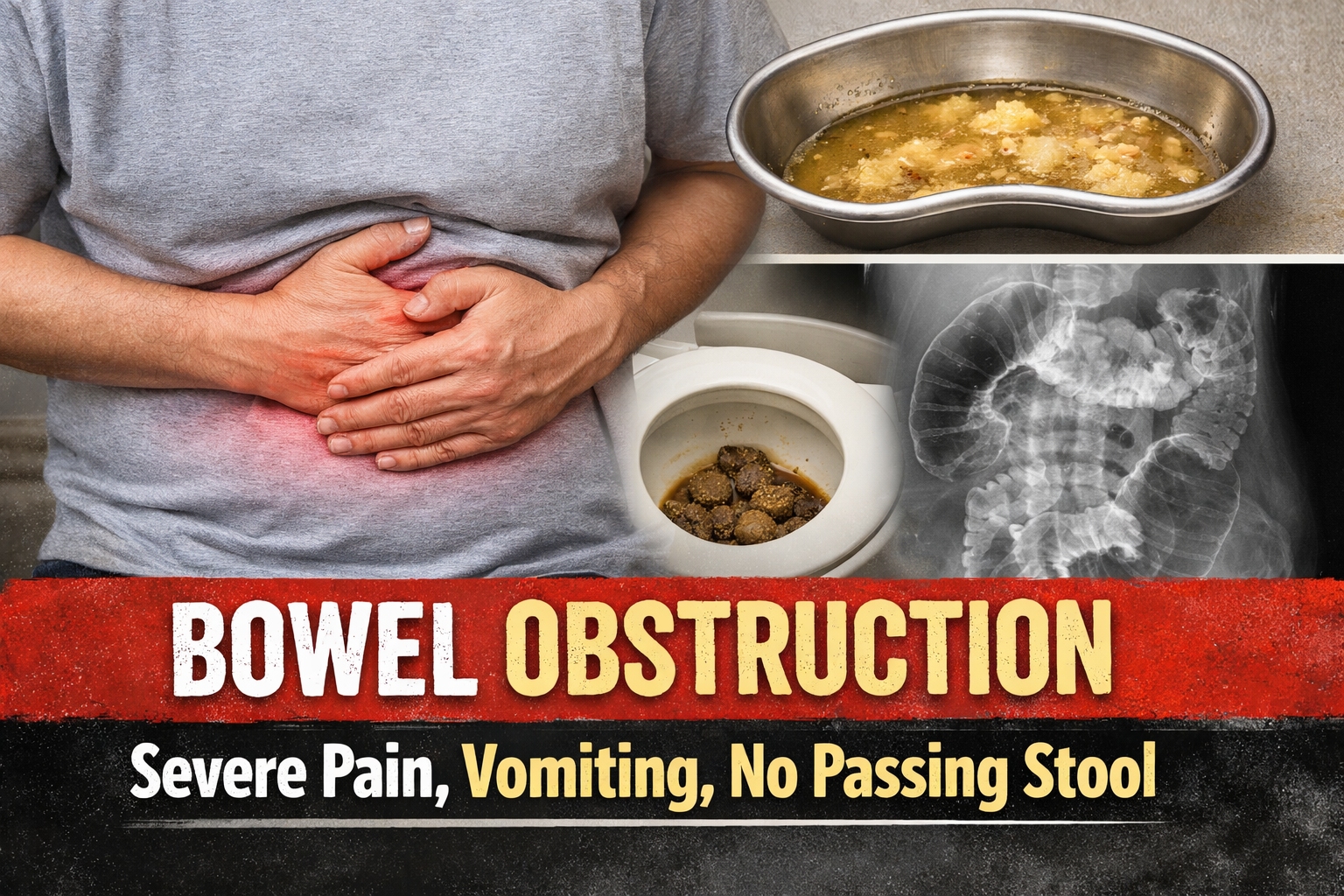
Bowel obstruction happens when the normal movement of food, fluid, and gas through the intestines becomes partly or fully blocked. In some cases, the problem is a physical blockage. In others, the bowel may stop pushing contents forward as it should.
This is not the same as everyday bloating or routine constipation. Some symptoms can overlap, but bowel obstruction may become serious if it is ignored, especially when pain, vomiting, abdominal swelling, and inability to pass gas or stool start to build together.
- Bowel obstruction means the intestines cannot move contents through normally.
- Symptoms often include cramping abdominal pain, bloating, nausea, vomiting, and trouble passing stool or gas.
- Common causes include scar tissue after surgery, hernias, tumors, and inflammatory bowel conditions.
- Symptoms may differ depending on whether the blockage is partial or complete, and whether it affects the small or large bowel.
- Severe or worsening symptoms, especially with persistent vomiting, major swelling, fever, or inability to pass gas or stool, need prompt medical evaluation.
- This article is for general education only and does not replace professional medical care.
What bowel obstruction means
A bowel obstruction is a condition in which material inside the intestines cannot move along in the usual way. That blockage may affect the small intestine, the large intestine (colon), or bowel function more generally.
Some obstructions are partial, meaning a limited amount can still pass through. Others are complete, where movement stops much more fully. That difference matters because a complete obstruction is more likely to cause intense symptoms and urgent complications.
It also helps to know that not every obstruction is caused by something physically stuck in the bowel. Sometimes the bowel muscles stop coordinating well enough to move contents along. This is often called a functional obstruction or ileus.
 Obstruction is not always the same as constipation
 Obstruction is not always the same as constipation
Constipation usually means bowel movements are infrequent, difficult, or hard to pass. A person may still pass some gas and may not have severe vomiting or escalating abdominal pain.
With bowel obstruction, the pattern is often more concerning. Symptoms may combine in a way that suggests something more than ordinary digestive slowdown, especially when a person has worsening pain, vomiting, abdominal distension, and little or no passage of gas or stool.
How the bowel normally moves food and waste
The intestines do not simply “hold” food. They actively move it forward through rhythmic muscle contractions called peristalsis. These wave-like movements help transport food, digestive fluids, and waste from one section of the digestive tract to the next.
When that flow is interrupted, material can build up above the blocked area. Gas and fluid may collect, the bowel can stretch, and symptoms such as pain, nausea, vomiting, and visible swelling may develop.
This basic idea explains why bowel obstruction can feel so uncomfortable. The gut is still trying to move contents forward, but something is preventing normal progress.
The main types of bowel obstruction
Understanding a few basic categories makes symptoms easier to interpret.
Partial vs complete obstruction
A partial obstruction means some material still gets through. Symptoms may come and go, or feel less dramatic at first. A person may still pass small amounts of gas or loose stool.
A complete obstruction blocks passage much more fully. In that setting, symptoms are often more intense, and the inability to pass gas or stool becomes a more important warning sign.
Small bowel vs large bowel obstruction
A small bowel obstruction affects the small intestine. Symptoms often develop more quickly and may include earlier vomiting and central abdominal cramping.
A large bowel obstruction affects the colon. It may develop more gradually, with more noticeable abdominal distension and later vomiting.
Mechanical obstruction vs functional obstruction
A mechanical obstruction means there is a physical problem narrowing or blocking the bowel. This could be scar tissue, a hernia, a mass, twisting, or another structural cause.
A functional obstruction, often called ileus, means the bowel is not moving properly even though there may be no physical barrier. This can happen after surgery, with some illnesses, or with factors that affect bowel motility.
What can cause bowel obstruction
There is no single cause of bowel obstruction. The most likely cause often depends on a person’s age, medical history, and where the problem occurs.
Adhesions after abdominal surgery
One of the best-known causes is adhesions, which are bands of internal scar tissue. They may form after abdominal surgery, infection, or inflammation.
Adhesions can pull on or narrow the bowel enough to interfere with normal passage. A person may develop this problem long after surgery, not just in the immediate recovery period.
Hernias
A hernia happens when tissue pushes through a weak area in muscle or connective tissue. If part of the bowel slips into that space and becomes trapped, obstruction can develop.
This can be especially concerning when blood supply to the trapped bowel is reduced. That raises the risk of bowel damage and makes urgent treatment more likely.
Tumors and narrowing inside or outside the bowel
Growths in or around the bowel can reduce the space available for normal flow. This may happen with tumors, large polyps, or narrowing related to inflammation and scarring.
Large bowel obstruction is often discussed in connection with masses in the colon, but other parts of the abdomen can also affect the bowel from outside by pressing on it.
Inflammatory conditions such as Crohn’s disease
Chronic inflammation can gradually thicken and scar the bowel wall. In Crohn’s disease, this may lead to strictures, which are narrowed segments that make it harder for bowel contents to pass.
Inflammation in or around the bowel can also increase swelling and irritation, which may worsen symptoms.
Twisting, telescoping, and other less common causes
Some less common but important causes include:
- Volvulus, where part of the bowel twists
- Intussusception, where one segment slides into another
- Bezoars, which are masses of hard-to-digest material
- Gallstone ileus, where a large gallstone enters and blocks the bowel
- Foreign bodies, in some situations
These causes are less common in the general adult population, but they are part of the broader picture.
Who may be at higher risk
Bowel obstruction can happen to many people, but some groups are more likely to face it.
Previous surgery and prior obstruction
A history of abdominal surgery is one of the clearest risk factors because of the potential for adhesions. The risk may be higher after multiple procedures.
A prior episode of bowel obstruction can also raise the chance of another one in the future, depending on the underlying cause.
Hernias, cancer, inflammatory bowel disease, and older age
Risk may also be higher in people who have:
- known hernias
- Crohn’s disease or other inflammatory bowel conditions
- cancers affecting the abdomen or pelvis
- prior radiation to the abdomen
- older age, which can overlap with other risk factors such as prior surgery or a higher chance of masses and reduced motility
Medicines and other contributing factors
Some medicines and medical problems can slow bowel movement and contribute to functional obstruction or worsen constipation-like symptoms. Severe illness, recent surgery, and problems affecting fluid or electrolyte balance may also interfere with normal bowel activity.
Not every person with these risk factors will develop obstruction. Still, knowing the pattern can help someone respond faster if symptoms appear.
Symptoms that may suggest bowel obstruction
Symptoms can vary, but bowel obstruction often causes a cluster of digestive complaints rather than a single isolated issue.
Cramping pain, bloating, nausea, and vomiting
A common symptom is abdominal pain that feels crampy or comes in waves. This happens because the bowel may continue trying to push contents forward against the blockage.
Nausea and vomiting are also common, especially when the obstruction affects the small bowel. Early vomiting can happen because the blockage is higher up in the digestive tract.
Bloating or abdominal distension may become more visible as gas and fluid collect. This can be more marked in large bowel obstruction.
Trouble passing gas or stool
Difficulty passing stool is an important clue, but difficulty passing gas can be just as important. In a complete obstruction, both may stop.
In a partial obstruction, some gas or even loose stool may still pass, which can make the problem harder to recognize. That is one reason symptoms should be considered as a group, not one by one.
Why symptoms may differ by location or severity
The symptom pattern can shift depending on where the problem is and how complete it is.
- Small bowel obstruction may cause earlier vomiting and more central cramping.
- Large bowel obstruction may cause more obvious abdominal swelling and slower symptom buildup.
- Partial obstruction may wax and wane.
- Complete obstruction tends to look more severe and persistent.
Why some symptoms can be mistaken for milder problems
Early symptoms may resemble constipation, food poisoning, a stomach virus, or nonspecific abdominal upset. That can delay evaluation.
The difference is often the combination and progression of symptoms. Worsening pain, repeated vomiting, visible abdominal swelling, and inability to pass gas or stool should not be brushed off as routine digestive discomfort.
What can happen if it is ignored
Not every case progresses the same way, but untreated bowel obstruction can lead to complications.
Dehydration and electrolyte problems
Repeated vomiting and poor intake can quickly lead to dehydration. The body may also lose important salts and minerals, sometimes called electrolytes, which help regulate muscle, nerve, and heart function.
This may contribute to weakness, dizziness, reduced urination, and worsening illness.
Reduced blood flow, perforation, and infection
If pressure builds or the bowel becomes trapped or twisted, blood flow may be reduced. That can injure the bowel wall.
In more serious situations, the bowel can perforate, meaning a hole develops. This may allow intestinal contents and bacteria to enter the abdomen, which can lead to severe infection.
Why delayed care can increase risk
The longer significant obstruction continues, the more strain it can place on the body. Delayed care may increase the chance of dehydration, bowel injury, infection, and a more complicated recovery.
That does not mean every episode becomes severe. It means persistent or escalating symptoms deserve medical attention rather than wait-and-see management.
When to seek medical help right away
Many digestive complaints improve with time, but bowel obstruction is not something to self-diagnose.
Signs that deserve emergency evaluation
Seek urgent medical care if symptoms suggest a possible bowel obstruction, especially when there is:
- significant abdominal pain that is severe or worsening
- repeated or persistent vomiting
- marked abdominal swelling
- inability to pass gas or stool
- fever
- dizziness, confusion, or signs of dehydration
- pain that becomes constant rather than crampy
These patterns can suggest that the situation is becoming more serious.
People who should be especially cautious
A lower threshold for medical evaluation makes sense if symptoms occur in someone with:
- previous abdominal surgery
- a known hernia
- inflammatory bowel disease
- a prior bowel obstruction
- abdominal or pelvic cancer history
In these groups, symptoms may be more than a temporary stomach problem.
What doctors may check
Medical evaluation usually starts with a careful history and physical exam.
Questions about symptoms and history
A clinician may ask when symptoms started, whether pain comes and goes or stays constant, whether vomiting is present, and whether stool or gas has passed recently.
They may also ask about prior surgeries, hernias, bowel disease, cancer history, medicines, and earlier episodes of obstruction.
Physical exam, imaging, and lab tests
The abdomen may be checked for distension, tenderness, bowel sounds, and signs of a hernia. Depending on the situation, evaluation may include imaging such as X-rays or CT scans and lab tests to look for dehydration, infection, or other complications.
The exact workup depends on the clinical picture, and only a qualified healthcare professional can determine what is appropriate in a given case.
Prevention and supportive habits
Prevention is not always possible because some causes, such as internal scar tissue, cannot be fully controlled. Still, some general steps may help lower risk or support earlier recognition.
Managing known risk factors
People with hernias, inflammatory bowel disease, or a history of obstruction may benefit from ongoing follow-up with their healthcare team. Managing underlying disease and responding early to new symptoms may reduce the chance of delayed care.
After abdominal surgery, it is also useful to know that future symptoms could be related to adhesions, even much later.
Everyday habits that support digestive health
General habits that support bowel health include:
- staying hydrated
- keeping regular movement and physical activity when possible
- supporting regular bowel habits
- discussing persistent digestive changes with a healthcare professional rather than self-treating for long periods
Diet advice varies depending on the individual. For example, someone with a known stricture or prior obstruction may receive different instructions than someone without those risks.
Why prevention is not always fully possible
Bowel obstruction is not always preventable through lifestyle alone. A person can be active and still develop obstruction because the cause may be structural, inflammatory, or related to past surgery.
That is why symptom awareness matters just as much as prevention.
Common myths about bowel obstruction
“It is just severe constipation”
Not necessarily. Although constipation and obstruction can overlap in symptoms, bowel obstruction may also involve worsening pain, vomiting, major abdominal distension, and reduced passage of gas.
“If symptoms come and go, it cannot be serious”
Not true. A partial obstruction may cause intermittent symptoms. Temporary relief does not always mean the problem is gone.
“Only older adults get bowel obstruction”
No. Risk factors differ by age, but bowel obstruction can affect younger adults too, especially those with previous surgery, hernias, inflammatory bowel disease, or certain other conditions.
Final
Bowel obstruction is a condition in which the intestines become partly or fully blocked, or stop moving contents forward normally. Common symptoms include cramping abdominal pain, nausea, vomiting, bloating, and trouble passing gas or stool.
Some symptoms may look like milder digestive problems at first, but the pattern matters. If symptoms are severe, worsening, or combined with vomiting, marked swelling, fever, or inability to pass gas or stool, prompt medical care is important.
Bowel obstruction should be evaluated by a healthcare professional rather than managed through self-diagnosis alone. Clear symptom recognition and timely care can make a meaningful difference.