Amyloidosis: Symptoms, Causes, Types, and How This Rare Disease Affects the Body

Amyloidosis is a rare disease caused by abnormal protein deposits that can damage the heart, kidneys, nerves, liver, and other organs. Learn the types, symptoms, causes, risk factors, and when to seek medical care.
Amyloidosis is a rare but serious disorder in which abnormal proteins build up inside tissues and organs. Those deposits, called amyloid, do not belong there. Over time, they can interfere with how the body works, sometimes affecting the heart, kidneys, nerves, liver, digestive tract, and soft tissues all at once.
One reason amyloidosis is so difficult is that it often does not announce itself clearly at first. A person may notice fatigue, swelling, shortness of breath, tingling in the feet, weight loss, or unusual bruising, but none of those symptoms automatically point to a single diagnosis. In many cases, that is why evaluation takes time.
Still, awareness matters. The earlier amyloidosis is recognized, the sooner doctors can look for the protein involved, check which organs are affected, and begin treatment or monitoring. This guide explains what amyloidosis is, the major types, common symptoms, causes, risk factors, organ involvement, and when symptoms should prompt medical attention.
What is amyloidosis?
Amyloidosis is a disease process in which certain proteins lose their normal shape, become unstable, and collect in the body as abnormal deposits. Instead of being used or broken down properly, these proteins fold the wrong way and clump together into stiff fibers known as amyloid fibrils.
Those deposits gradually settle in the spaces between cells. As they accumulate, they crowd normal tissue, distort organ structure, and make it harder for affected organs to do their job. Depending on where the amyloid builds up, the result may be heart stiffness, kidney damage, nerve problems, digestive issues, liver enlargement, or symptoms involving several systems at once.
Amyloidosis is considered rare, but it is often thought to be underrecognized. Part of the problem is that many symptoms overlap with more common conditions. A person may be treated for heart failure, kidney disease, neuropathy, carpal tunnel syndrome, or chronic digestive trouble before the underlying protein disorder is identified.
Another important point is that amyloidosis is not just one disease. It is a group of disorders linked by the same basic process, but the specific protein involved can differ. That difference matters because the type of amyloidosis influences who gets it, which organs are most likely to be affected, how quickly it may progress, and how it is approached medically.
How amyloidosis develops
Proteins need a precise structure to work correctly. In amyloidosis, a protein becomes unstable, misfolds, and starts forming abnormal fibers. The body often cannot clear these fibers efficiently. As a result, they accumulate and create deposits that can persist and grow over time.
These deposits are not harmless. They may:
- stiffen tissues
- disrupt normal organ architecture
- interfere with blood flow or filtration
- damage nerves
- weaken electrical conduction in the heart
- trigger progressive loss of organ function
The process can be slow and subtle or more aggressive, depending on the amyloid type and the organs involved.
Main types of amyloidosis
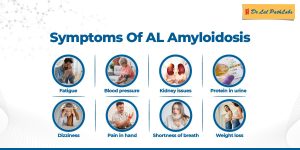
AL amyloidosis
AL amyloidosis, also called light chain amyloidosis, is one of the most common systemic forms. It develops when abnormal plasma cells in the bone marrow produce faulty light chains, which are pieces of antibodies. These light chains misfold and become amyloid deposits.
AL amyloidosis is related to plasma cell disorders. Sometimes it appears alongside multiple myeloma, but it can also happen without full-blown myeloma. The heart, kidneys, nerves, liver, and soft tissues are commonly involved.
This type is especially important because it can progress quickly in some patients, particularly when the heart is affected.
AA amyloidosis
AA amyloidosis is associated with long-term inflammation. In this form, the body produces large amounts of serum amyloid A protein in response to chronic inflammatory disease or persistent infection. Over time, that protein can misfold and deposit in tissues.
AA amyloidosis may occur in people with conditions such as:
- rheumatoid arthritis
- inflammatory bowel disease
- chronic infections
- other longstanding inflammatory disorders
The kidneys are often heavily affected, but other organs can be involved too.
Hereditary amyloidosis
Hereditary amyloidosis is caused by inherited gene mutations that make a specific protein more likely to misfold. The best-known hereditary form involves the transthyretin (TTR) protein, though other proteins can also be responsible.
This type runs in families, but the age of onset and severity can vary widely. Some people develop symptoms in midlife, while others do not notice problems until later. The nerves and heart are common targets, though patterns differ depending on the mutation.
Wild-type ATTR amyloidosis
Wild-type transthyretin amyloidosis is not inherited. In this form, a normal transthyretin protein becomes unstable with aging and gradually deposits in tissues, especially the heart.
It is more often seen in older adults, particularly older men. It may also be linked with a history of carpal tunnel syndrome or spinal stenosis before obvious heart symptoms appear.
Dialysis-related amyloidosis
People on long-term dialysis can develop amyloid deposits made from beta-2 microglobulin. These deposits tend to affect bones, joints, and connective tissues more than internal organs.
Localized amyloidosis
Sometimes amyloid builds up in one limited area rather than throughout the body. This is known as localized amyloidosis. It may affect the skin, bladder, airways, or other tissues without widespread systemic disease.
Amyloidosis symptoms
Symptoms depend heavily on where the abnormal protein is collecting. Some people have vague early complaints. Others present with clear signs of heart, kidney, or nerve involvement.
General symptoms
Many people first notice symptoms that seem broad or hard to explain, such as:
- persistent fatigue
- reduced stamina
- unintentional weight loss
- swelling in the legs or ankles
- weakness
- easy bruising
- a general sense that something is wrong
These symptoms are not unique to amyloidosis, but when they appear together or worsen over time, they deserve attention.
Heart-related symptoms
When amyloid affects the heart, symptoms may include:
- shortness of breath with activity
- breathlessness when lying flat
- waking at night feeling short of breath
- swelling in the legs or abdomen
- irregular heartbeat or palpitations
- dizziness or fainting
- reduced exercise tolerance
- chest discomfort
Cardiac amyloidosis can lead to a stiff heart muscle, a condition often described as restrictive cardiomyopathy. The heart may still look thickened on imaging, but it does not relax and fill properly.
Kidney-related symptoms
Kidney involvement may develop quietly. Common signs include:
- protein in the urine
- foamy urine
- swelling in the ankles, legs, or around the eyes
- declining kidney function on lab tests
- fluid retention
In some patients, kidney disease is discovered before amyloidosis itself is recognized.
Nerve symptoms
Amyloidosis can damage both peripheral nerves and autonomic nerves. Symptoms may include:
- numbness or tingling in the feet or hands
- burning pain
- weakness
- trouble with balance
- carpal tunnel syndrome
- dizziness when standing
- bowel or bladder changes
- abnormal sweating
Autonomic nerve involvement can affect blood pressure, digestion, sexual function, and temperature regulation.
Digestive symptoms
Amyloid deposits in the gastrointestinal tract or autonomic nerves may lead to:
- nausea
- diarrhea
- constipation
- early fullness
- poor appetite
- weight loss
- bloating
- trouble swallowing
An enlarged tongue can also occur, especially in some cases of AL amyloidosis, and may affect speech, chewing, or swallowing.
Liver and soft tissue symptoms
Liver involvement may cause:
- liver enlargement
- abdominal fullness
- abnormal liver blood tests
- swelling from fluid retention
Soft tissue involvement may show up as:
- bruising around the eyes
- thickened tissues
- joint discomfort
- swelling in unusual areas
Causes of amyloidosis
The cause depends on the type.
Plasma cell abnormalities
In AL amyloidosis, the problem begins with abnormal plasma cells producing unstable light chains. These proteins circulate in the blood and can deposit in organs.
Chronic inflammation
In AA amyloidosis, long-term inflammation keeps serum amyloid A levels elevated. With enough time and ongoing inflammatory stress, the protein may begin forming amyloid.
Inherited gene mutations
Hereditary forms happen because a gene mutation changes the structure or behavior of a protein, making it more likely to misfold.
Aging-related protein instability
In wild-type ATTR amyloidosis, aging appears to make normal transthyretin more likely to become unstable and deposit in tissues, especially the heart.
Long-term dialysis
Dialysis-related amyloidosis results from buildup of beta-2 microglobulin in people who have been on dialysis for years.
Risk factors for amyloidosis
The exact risk profile varies by type, but common risk factors include:
Older age
Many forms become more likely with age, especially wild-type ATTR amyloidosis.
Male sex
Some types, particularly wild-type cardiac amyloidosis, are seen more often in men.
Plasma cell disorders
A history of monoclonal gammopathy, multiple myeloma, or related bone marrow disorders raises the risk of AL amyloidosis.
Chronic inflammatory disease
Longstanding inflammatory illnesses can increase the risk of AA amyloidosis.
Family history
A family history of hereditary amyloidosis may indicate an inherited mutation.
Long-term dialysis
Years of dialysis treatment increase the chance of dialysis-related amyloid buildup.
Which organs are most commonly affected?
Heart
Heart involvement is one of the most serious forms because it can lead to heart failure, rhythm problems, fainting, and progressive limitations in daily activity.
Kidneys
The kidneys are commonly affected, especially in AL and AA amyloidosis. Protein leakage and gradual kidney damage are common patterns.
Nervous system
Peripheral nerve damage and autonomic dysfunction can significantly affect quality of life, mobility, blood pressure, digestion, and independence.
Liver
The liver may enlarge and become less efficient, though symptoms are sometimes subtle at first.
Digestive tract
Digestive involvement can cause troublesome symptoms and contribute to weight loss and poor nutrition.
Soft tissues and musculoskeletal system
Carpal tunnel syndrome, tendon issues, joint symptoms, and tongue enlargement may be clues, particularly in specific forms of amyloidosis.
How amyloidosis can affect everyday life
Amyloidosis often affects more than one part of life at the same time. Fatigue may make work harder. Shortness of breath may limit activity. Neuropathy may change balance, walking, or hand use. Digestive symptoms can interfere with appetite and nutrition. Swelling or heart symptoms may reduce stamina for even simple tasks.
The emotional burden can also be significant. People may spend months looking for answers before diagnosis. Some feel frustrated because symptoms are real but not obvious to others. Others must adapt to a new routine of specialist appointments, testing, and monitoring.
Daily life may eventually involve:
- pacing physical activity
- adjusting work or home routines
- tracking symptoms
- managing fluid or diet recommendations
- attending regular follow-up visits
- relying more on family or caregiver support
When to seek medical attention
Amyloidosis is not a condition people can diagnose themselves, but certain patterns should not be ignored.
Seek prompt medical evaluation for:
- unexplained shortness of breath
- swelling in the legs, ankles, or abdomen
- foamy urine or signs of protein in the urine
- numbness or tingling that keeps worsening
- unexplained weight loss
- fatigue that is progressive and out of proportion
- irregular heartbeat or fainting
- multiple unexplained symptoms involving different organ systems
Urgent care is especially important if symptoms include chest pain, fainting, severe breathlessness, rapid swelling, or signs of worsening heart failure.
People with known plasma cell disorders, chronic inflammatory disease, long-term dialysis, or a family history of hereditary amyloidosis should be especially careful not to ignore new symptoms.
Living with amyloidosis
Living with amyloidosis usually means long-term follow-up and coordination between specialists. Depending on the organs involved, care may include input from hematology, cardiology, nephrology, neurology, gastroenterology, and genetic counseling.
Practical strategies often include:
- keeping a clear list of symptoms and changes over time
- attending regular follow-up visits
- asking which organs need ongoing monitoring
- discussing fatigue and activity limits honestly
- seeking support from family, caregivers, or patient communities
- addressing mental and emotional stress, not just physical symptoms
Even though amyloidosis can be serious, many people do better when the disease is recognized earlier and monitored carefully.
Conclusion
Amyloidosis is a rare protein-folding disorder that can damage important organs and cause a wide mix of symptoms, from fatigue and swelling to nerve problems, kidney abnormalities, and heart failure. Because the signs can be subtle or scattered across different body systems, diagnosis is often delayed.
Understanding the major types of amyloidosis is essential. AL amyloidosis is tied to abnormal light chains from plasma cells. AA amyloidosis develops in the setting of chronic inflammation. Hereditary forms are caused by gene mutations. Wild-type ATTR amyloidosis is linked to aging, especially in older men. Each type has its own pattern, risks, and organ involvement.
The most important takeaway is this: persistent, unexplained symptoms that affect more than one organ system deserve careful medical attention. Early evaluation can make a real difference in identifying the disease, assessing organ involvement, and guiding treatment decisions.