Food Poisoning: How Long After Eating Does It Start?
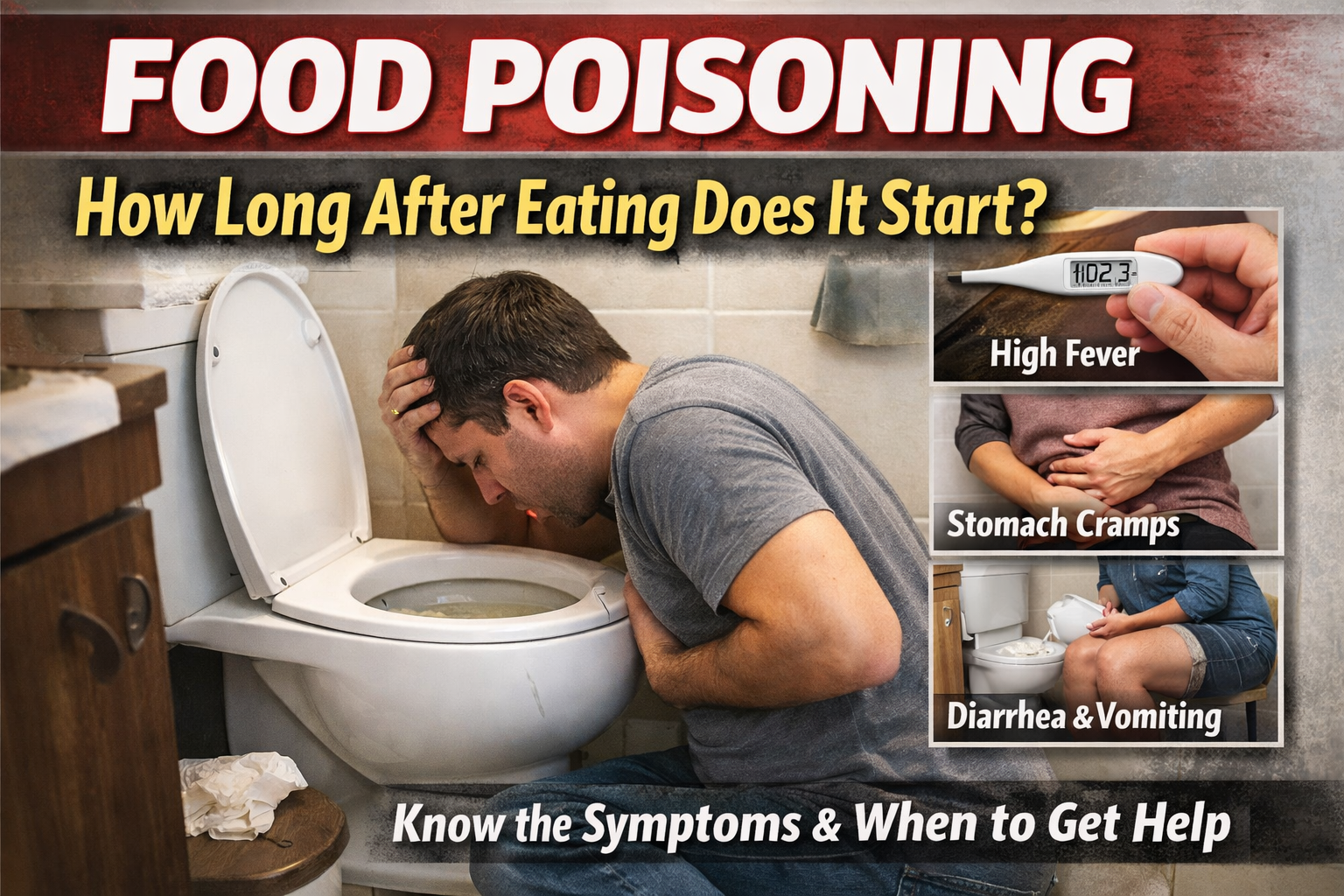
Most people ask the same question after a suspicious meal: How long after eating does food poisoning start? In many cases, symptoms begin within a few hours. But the exact timing can vary widely depending on what contaminated the food and how your body responds.
That timing matters, but it is not the only clue. Food poisoning can look similar to a stomach bug or another digestive problem, so it helps to understand the full picture: when symptoms may begin, what they usually feel like, what you can do at home, and when it is time to get medical care.
- Food poisoning often starts within hours after eating, but some cases take longer to show up.
- Common symptoms include diarrhea, nausea, vomiting, stomach cramps, and fever.
- The biggest short-term risk is usually dehydration, especially if vomiting or diarrhea is frequent.
- Most mild cases improve with rest, fluids, and electrolytes, but some people need medical care.
- Bloody diarrhea, trouble keeping fluids down, confusion, high fever, or very dark urine are warning signs that should not be ignored.
What food poisoning actually means
Food poisoning, also called foodborne illness, is sickness caused by food or drink contaminated with harmful bacteria, viruses, parasites, toxins, or certain chemicals. That is why the term covers a wide range of illnesses rather than one single infection.
This also explains why one person may feel ill quickly while another feels sick much later, even after eating the same meal. The cause is not always obvious from the food’s appearance, taste, or smell. Safe-looking food can still be contaminated during handling, storage, or cooking.
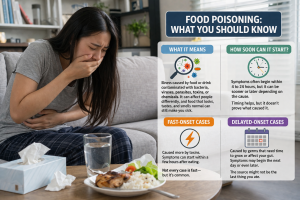
 How soon can food poisoning start after eating?
 How soon can food poisoning start after eating?
A practical answer is this: food poisoning often starts within 4 to 24 hours, but the timeline can be shorter or longer depending on the cause. Some toxins act quickly. Some infections take longer because germs need time to multiply or affect the gut.
So if you start vomiting a few hours after a meal, food poisoning is one possibility. But if symptoms begin the next day, or even later, it can still fit the picture. Timing helps, but it does not confirm the exact culprit on its own.
Fast-onset cases
Some forms of foodborne illness are linked more to toxins than to a germ slowly growing in your body. In those cases, symptoms may appear relatively quickly after eating.
People often assume “if it did not happen right away, it cannot be food poisoning.” That is not always true. Fast onset is common, but it is not the rule in every case.
Delayed-onset cases
Other types of foodborne illness take longer. That delay happens because the organism may need time to multiply, irritate the gut, or trigger a broader immune response.
This is one reason readers should be cautious about blaming the very last thing they ate. The food that made you sick may not always be the most recent meal.
 Why the timeline is different from person to person
 Why the timeline is different from person to person
There is no one-size-fits-all food poisoning clock. Several things can affect when symptoms appear and how severe they become:
- the type of germ or toxin involved
- how much contaminated food was consumed
- your age and general health
- whether you are pregnant
- whether your immune system is weakened
- how much fluid you lose through diarrhea or vomiting
Two people can eat the same dish and have very different experiences. One may recover quickly with mild cramps, while another may develop more intense vomiting, dehydration, or lingering diarrhea.
Common symptoms of food poisoning
The most common symptoms are fairly recognizable, though they can range from mild to intense. They include:
- diarrhea
- nausea
- vomiting
- stomach pain or cramping
- fever
- headache
- weakness or fatigue
For many adults, symptoms start suddenly and feel hard to ignore. The body is essentially reacting to something harmful in the digestive system.
Symptoms can be vague at first
Not every case begins dramatically. Some people first notice only nausea, bloating, fatigue, or a vague upset stomach. Those symptoms are not specific to food poisoning and can overlap with viral gastroenteritis, medication effects, anxiety, overeating, reflux, or other digestive issues.
That is why symptom timing alone is not enough to diagnose yourself. A recent meal may be related, but it may also be a coincidence.
How long does food poisoning usually last?
Many mild cases improve within a day or two, and some public health sources note that food poisoning often gets better within about a week depending on the cause. The duration can vary quite a bit.
In general:
- some people feel much better within 12 to 48 hours
- others have diarrhea or weakness for several days
- a smaller number may remain sick longer, especially if dehydration develops or the infection is more severe
A useful rule of thumb is to pay attention not only to how long symptoms last, but also to whether they are improving. A slow but steady recovery is different from worsening illness.
What can cause food poisoning?
Food poisoning is usually caused by contamination, not necessarily by food that looks rotten. Common problems include:
- undercooking meat, poultry, seafood, or eggs
- poor hand hygiene during food preparation
- cross-contamination between raw foods and ready-to-eat foods
- leaving perishable food out too long
- improper refrigeration
- consuming higher-risk foods such as raw sprouts, unpasteurized dairy products, or undercooked animal products
This is why leftovers, buffet foods, picnic foods, or foods carried in a hot car can become risky even if they tasted fine.
What to do if you think you have food poisoning
Most otherwise healthy adults with mild symptoms can focus first on supportive care. That means helping the body recover rather than trying to force normal eating right away.
1. Prioritize fluids
The most important step is replacing what your body is losing. Vomiting, diarrhea, sweating, and fever can all reduce fluid and electrolyte levels. NIDDK notes that replacing lost fluids and electrolytes is the most important treatment for food poisoning.
Small, frequent sips are often easier to tolerate than large drinks. Some people do better with oral rehydration solutions, broth, or other fluids that contain electrolytes.
2. Ease back into food
Once vomiting settles and you feel ready, bland foods are often easier to tolerate. Examples may include toast, rice, crackers, bananas, applesauce, oatmeal, or simple soup.
You do not need to rush into a full meal. Greasy, very spicy, or heavy foods may feel worse while your stomach is still irritated.
3. Be cautious with medicine
Some over-the-counter products may help certain symptoms, but medication choices are not one-size-fits-all. Anti-diarrheal medicine is not always appropriate because diarrhea can be part of how the body clears the illness. In some foodborne illnesses, guidance emphasizes hydration rather than routine antibiotic or anti-diarrheal use.
Because the right approach depends on the cause and the person’s health status, it is safer to view medicines as symptom tools rather than a universal fix.
Why dehydration matters
The most common complication of food poisoning is dehydration. This happens when the body loses more fluid and electrolytes than it can replace.
Possible signs include:
- very dark urine
- urinating less than usual
- dry mouth
- dizziness or lightheadedness
- unusual weakness
- intense thirst
Dehydration matters because it can make weakness, nausea, and confusion worse. In severe cases, hospital treatment and IV fluids may be needed.
What can happen if you ignore it?
A mild case may resolve on its own. But ignoring more severe symptoms can allow dehydration or complications to progress.
This is especially important for:
- older adults
- pregnant people
- people with weakened immune systems
- people with certain chronic illnesses
- anyone unable to keep fluids down
In these groups, what begins as vomiting or diarrhea can become more serious faster than many people expect.
When to call a doctor or seek urgent care
General medical guidance recommends getting help if you have any of the following:
- bloody diarrhea or bloody vomit
- fever above 102°F
- frequent vomiting or inability to keep fluids down
- signs of dehydration
- confusion, faintness, or severe weakness
- symptoms that last more than a few days or are getting worse instead of better
It is also reasonable to seek medical advice sooner if you are pregnant, immunocompromised, or have other health conditions that make dehydration or infection risk more concerning.
How to lower your risk next time
The basic food-safety framework from CDC is simple and practical: clean, separate, cook, and chill.
Clean
Wash hands, utensils, cutting boards, and surfaces regularly. Rinse fresh produce under running water.
Separate
Keep raw meat, poultry, seafood, and eggs away from foods that are ready to eat. Cross-contamination can happen in the shopping cart, refrigerator, cutting board, or countertop.
Cook
Use safe internal temperatures rather than guessing by color alone. FoodSafety.gov lists:
- 145°F (63°C) for fish
- 160°F (71°C) for ground meats
- 165°F (74°C) for poultry and leftovers
Chill
Refrigerate perishable foods promptly. Waiting too long at room temperature increases the chance that harmful germs can grow.
Common myths about food poisoning
Myth 1: It always starts immediately
Not true. Some cases begin quickly, but others show up later. The timeline depends on the cause.
Myth 2: Only spoiled-looking food can cause it
Not true. Food can look, smell, and taste normal and still be contaminated.
Myth 3: The last thing you ate must be the cause
Not necessarily. Some foodborne illnesses take longer to appear, so the source meal may have been earlier.
Myth 4: Any diarrhea should be stopped right away
Not always. In some cases, diarrhea is part of the body’s response, and routine anti-diarrheal use may not be ideal for everyone.
Myth 5: If you can still drink water, it is never serious
False. Some people can drink a little but still become dehydrated, especially if vomiting and diarrhea continue. Watch hydration signs closely.
Final takeaway
If you are wondering how long after eating food poisoning starts, the most practical answer is: often within hours, but not always. Symptoms and timing vary because food poisoning is not one single illness.
For many adults, recovery centers on hydration, electrolyte replacement, rest, and gradual eating as tolerated. But red flags such as bloody stool, high fever, confusion, very dark urine, or trouble keeping fluids down deserve medical attention. When in doubt, especially if symptoms are severe or persistent, it is safer to check with a healthcare professional.