Hashimoto’s Disease: Understanding Symptoms, Causes and Effects on Thyroid Function
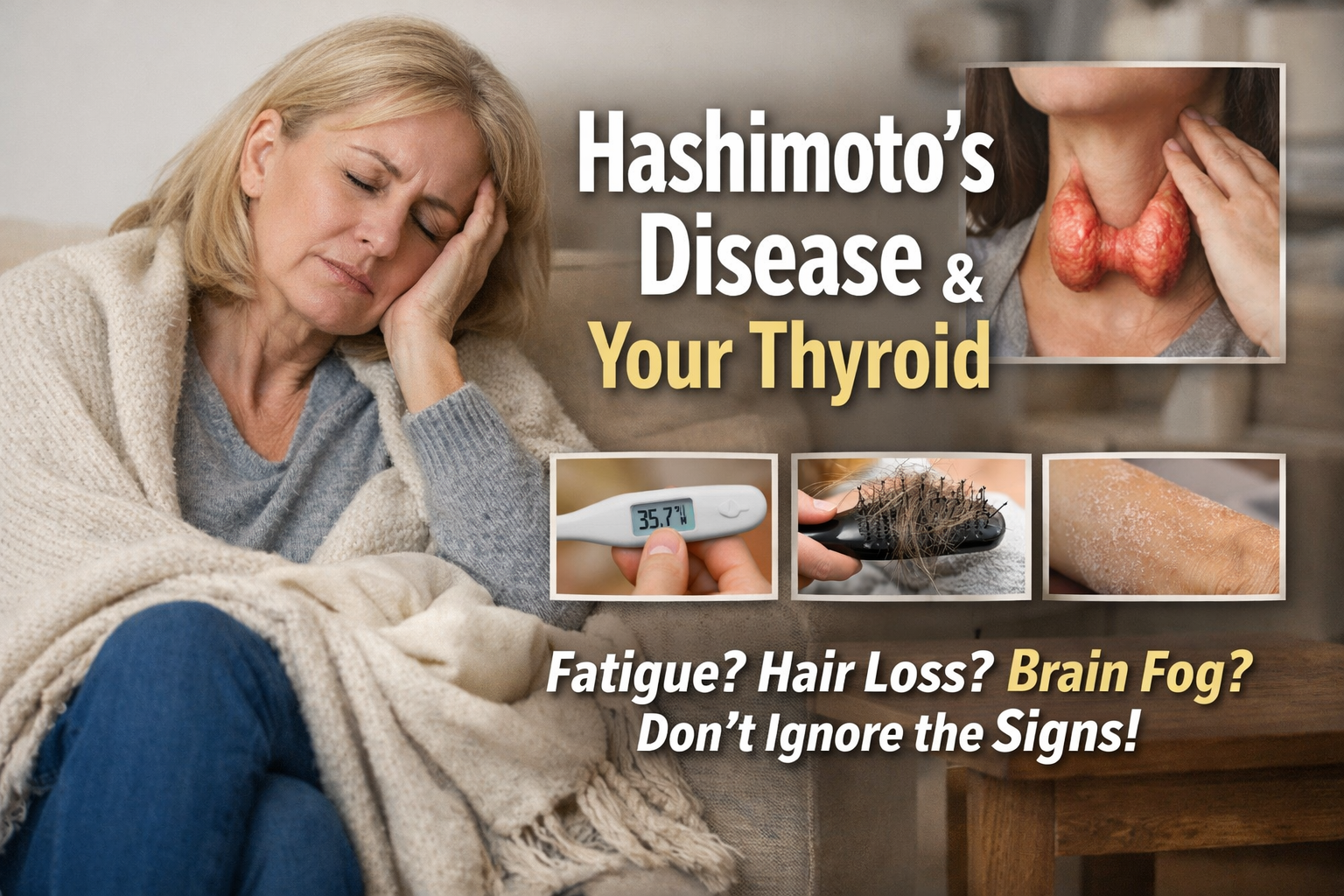
Hashimoto disease is a common autoimmune condition that affects the thyroid gland. In many people, it develops slowly, which means the signs can be easy to dismiss at first.
Because the thyroid helps regulate metabolism, temperature, energy use, and other body processes, changes in thyroid function can affect daily life in many different ways. This guide explains the condition in plain language and focuses on general education rather than self-diagnosis.
- Hashimoto disease is an autoimmune condition in which the immune system targets the thyroid gland.
- It often leads to hypothyroidism over time, but the two terms are not exactly the same thing.
- Symptoms may be subtle at first and can overlap with stress, aging, sleep problems, or other health issues.
- Common signs include fatigue, cold intolerance, dry skin, constipation, hair thinning, and brain fog.
- Ignoring ongoing symptoms may affect quality of life and long-term health, including heart, mood, and reproductive health.
- A medical evaluation is important if symptoms are persistent, worsening, or interfering with everyday function.
What Hashimoto Disease Is
Hashimoto disease, also called Hashimoto thyroiditis, is an autoimmune thyroid disease. In autoimmune conditions, the immune system mistakenly reacts against the body’s own tissues. In this case, the main target is the thyroid gland.
Over time, this immune activity can lead to ongoing inflammation in the thyroid. As more thyroid tissue is affected, the gland may have more difficulty producing enough hormones to meet the body’s needs.
Hashimoto’s vs. hypothyroidism
These terms are related, but they are not identical.
Hashimoto’s refers to the autoimmune process. Hypothyroidism refers to the result: an underactive thyroid that does not make enough hormone. Many people with Hashimoto’s eventually develop hypothyroidism, but the autoimmune condition may begin before hormone levels clearly fall outside the usual range.
Why the condition often develops gradually
One reason Hashimoto disease can be hard to spot is that it usually does not appear all at once. The thyroid may keep working well enough for a while, even as immune-related inflammation is already happening in the background.
That slow progression means a person may notice only small changes at first, such as lower energy, feeling colder than usual, or difficulty concentrating.
Why the Thyroid Matters
The thyroid is a small gland in the lower front of the neck. Even though it is small, it plays a major role in how the body uses energy.
Its hormones help regulate metabolic rate, body temperature, heart rhythm, digestion, and many aspects of brain and muscle function. When thyroid hormone levels shift, the effects can show up across multiple body systems rather than in just one place.
What thyroid hormones do
The thyroid mainly produces hormones known as T4 (thyroxine) and T3 (triiodothyronine). These hormones travel through the bloodstream and influence how quickly or slowly the body’s cells work.
In simple terms, they help set the body’s pace. When hormone levels are too low, many functions can slow down.
Why small hormone changes can have wide effects
Because thyroid hormones affect so many tissues, even modest changes may alter how a person feels physically and mentally. That is why a thyroid condition may show up as fatigue, constipation, skin changes, low mood, reduced exercise tolerance, or menstrual changes rather than one single obvious symptom.
How Hashimoto’s Changes Thyroid Function
Hashimoto disease affects the thyroid through a long-term immune response. The immune system creates inflammation and may produce antibodies that target thyroid-related proteins.
As this process continues, healthy thyroid tissue can become damaged. The gland may then struggle to keep making enough hormone, especially over time.
Autoimmune attack and inflammation
In autoimmune thyroid disease, the immune system does not correctly recognize thyroid tissue as part of the body it is meant to protect. Instead, it reacts to it. This can lead to chronic inflammation.
Inflammation does not always cause pain that a person can feel directly. In Hashimoto’s, the more noticeable effects often come from changing thyroid function rather than from the inflammation itself.
From normal thyroid function to an underactive thyroid
At first, thyroid hormone levels may still appear normal. Later, as the gland becomes less able to compensate, hormone production may decline.
This is when symptoms of an underactive thyroid may become more obvious. Some people may also experience fluctuations along the way, which can make the pattern feel confusing.
Common Symptoms and Why They Can Be Easy to Miss
Hashimoto symptoms often build slowly. Many are common complaints in everyday life, which is one reason people may not connect them to thyroid function right away.
Symptoms also vary from person to person. Some may notice mainly physical changes, while others are more affected by mood, concentration, or energy.
Energy, temperature, and metabolism changes
A common complaint is fatigue that does not improve fully with rest. People may feel physically slowed down, less motivated, or unusually drained by activities that used to feel manageable.
Other common changes include:
- increased sensitivity to cold
- unexplained weight gain or greater difficulty losing weight
- reduced stamina during exercise
- a sense of moving or thinking more slowly than usual
These changes are not unique to Hashimoto disease, but they can be part of the overall pattern.
Skin, hair, and body changes
Low thyroid function can affect the skin, hair, and soft tissues. Some people notice that their skin becomes drier or rougher than before.
Other possible changes include:
- hair thinning
- more brittle hair texture
- brittle nails
- puffiness in the face, especially around the eyes
- a swollen or full feeling in the neck if the thyroid becomes enlarged
Not everyone will have visible thyroid swelling, and not everyone with Hashimoto’s develops a goiter.
Mood, concentration, and “brain fog”
The term brain fog is not a formal diagnosis, but many people use it to describe a real cluster of symptoms. These may include slower thinking, forgetfulness, trouble focusing, or difficulty finding words.
Mood changes may also appear. Some people report low mood, irritability, less mental resilience, or a reduced sense of well-being. These experiences can be frustrating, especially when they are mistaken for “just stress.”

Digestion, muscles, joints, and menstrual changes
Because thyroid function influences many body systems, symptoms may also include:
- constipation
- bloating
- muscle aches or weakness
- joint stiffness
- heavier or irregular periods
- lower sex drive
In some cases, these symptoms are the main reason a person seeks medical advice.
Why symptoms can overlap with other conditions
This is an important point: these symptoms are not specific to Hashimoto disease. Similar complaints can happen with iron deficiency, depression, sleep problems, perimenopause, other autoimmune conditions, medication effects, or many other issues.
That overlap is one reason an article like this cannot diagnose the condition. Persistent or unexplained symptoms should be assessed by a qualified clinician.
Causes and Risk Factors
There is no single cause of Hashimoto disease. It is better understood as a condition that likely develops from a mix of immune tendency, genetics, and environmental influences.
Researchers continue to study why some people develop autoimmune thyroid disease while others do not.
Family history and autoimmune background
A family history of thyroid disease or autoimmune illness may increase risk. People who already have one autoimmune condition may also be more likely to develop another.
This does not mean the condition is guaranteed to occur. It simply means susceptibility may be higher in some individuals.
Sex, age, pregnancy, and hormonal shifts
Hashimoto disease is more commonly recognized in women than in men. It often becomes apparent in adulthood, though it can occur at other ages as well.
Hormonal transition periods, including pregnancy and the postpartum period, may be times when thyroid-related immune changes are more likely to come to attention.
Environmental and lifestyle-related triggers under study
Researchers have explored the possible roles of infection, iodine exposure, smoking, stress, and environmental factors. Some of these may act as contributing triggers in certain people, but they do not explain every case.
This is a useful place for caution: readers should be wary of overly simple claims that blame one food, one toxin, or one habit for every case of Hashimoto’s.
What Can Happen If It Is Overlooked
Not every person with Hashimoto disease will have severe complications, but persistent underactive thyroid function can affect health over time. That is why appropriate evaluation matters.
The consequences are not only physical. The condition may also affect everyday functioning, relationships, work capacity, and emotional well-being.
Effects on cholesterol, heart health, and energy
When thyroid hormone levels are too low, metabolism slows. This can contribute to reduced energy and lower exercise tolerance. In some people, it may also be associated with less favorable cholesterol patterns.
That matters because long-term metabolic changes can influence cardiovascular health.
Effects on mood, cognition, and daily function
Ongoing fatigue and slower thinking can interfere with work, family tasks, and social life. People may find it harder to focus, keep up with routines, or feel like themselves.
When symptoms last a long time, emotional strain may increase. Feeling physically unwell without a clear explanation can be isolating.
Fertility and pregnancy-related concerns
Thyroid function is especially important during pregnancy and when planning pregnancy. Changes in thyroid hormone balance may affect menstrual cycles, fertility, and pregnancy-related health.
This does not mean every person with Hashimoto’s will have pregnancy problems. It means that thyroid concerns during pregnancy or while trying to conceive should be discussed with a clinician rather than ignored.
General Habits That May Support Overall Health
Lifestyle habits do not replace medical evaluation, but they can support general well-being. A steady routine may also make it easier to notice when symptoms are changing.
The most helpful advice is usually simple, realistic, and sustainable.
Sleep, stress, movement, and routine
Aim for consistent sleep patterns when possible. Poor sleep can worsen fatigue and make symptoms harder to interpret.
Gentle, regular movement may also support energy, mood, and overall health. This does not have to mean intense exercise. For some people, walking, stretching, or low-impact activity feels more manageable during periods of low energy.
Chronic stress does not “cause” every autoimmune condition, but stress can affect how people feel day to day. Basic stress-reduction habits such as breathing exercises, realistic scheduling, and recovery time may help.
Nutrition and avoiding extreme claims
A balanced eating pattern supports general health, but readers should be cautious with restrictive or dramatic dietary claims online. No single food plan can confirm, rule out, or universally “fix” Hashimoto disease.
Nutrition questions become more individual if a person also has another condition, such as celiac disease or iron deficiency. That is a conversation to have with a qualified healthcare professional.
Symptom tracking and follow-up habits
It may help to keep a simple record of:
- fatigue levels
- sleep patterns
- bowel changes
- menstrual changes
- neck fullness or swallowing discomfort
- mood and concentration changes
A basic symptom log can make medical visits more productive, especially when changes are gradual.
When to See a Doctor or Seek Urgent Care
Not every symptom needs emergency care, but ongoing thyroid-related symptoms are worth discussing with a clinician, especially if they are persistent or affecting daily life.
When to book a non-urgent medical visit
Schedule an appointment if you have a pattern of symptoms such as:
- ongoing fatigue
- cold intolerance
- constipation
- dry skin or hair thinning
- unexplained weight change
- brain fog
- menstrual irregularities
- a family history of thyroid or autoimmune disease
These symptoms do not prove Hashimoto disease, but they do justify a medical discussion.
When symptoms should be evaluated sooner
Seek earlier evaluation if symptoms are clearly worsening, interfering with work or daily routines, or appearing together in a way that suggests a broader thyroid issue.
It is also reasonable to seek prompt medical advice if you notice visible swelling in the front of the neck, a feeling of pressure there, or new difficulty swallowing.
Red flags that need urgent attention
Urgent medical attention is appropriate if someone develops:
- chest pain
- trouble breathing
- severe confusion
- fainting
- rapid worsening of neck swelling
- severe depression or thoughts of self-harm
These symptoms are not typical “watch and wait” issues and should not be managed through online reading alone.
Common Myths About Hashimoto’s
Misunderstandings are common because the condition develops slowly and overlaps with many other issues.
“Hashimoto’s and hypothyroidism are exactly the same”
Not exactly. Hashimoto’s is the autoimmune process; hypothyroidism is one common outcome of that process.
A person may have Hashimoto-related thyroid autoimmunity before clear hypothyroidism becomes obvious.
“You would always know if you had it”
Not necessarily. Symptoms may be mild, gradual, or mistaken for something else.
That is one reason some people live with symptoms for a long time before getting evaluated.
“Lifestyle habits alone can confirm or rule it out”
They cannot. Healthy habits support overall well-being, but they do not diagnose autoimmune thyroid disease.
Likewise, feeling better or worse after changing diet or routine does not by itself prove what condition is present.
Hashimoto disease is an autoimmune condition that can gradually reduce thyroid function over time. Because the thyroid affects many systems in the body, the signs may show up as fatigue, cold intolerance, dry skin, constipation, hair thinning, mood changes, or brain fog rather than one single symptom.
The symptoms can be easy to overlook, but persistent or worsening changes deserve attention. A proper medical evaluation is the safest way to understand whether thyroid function may be part of the picture.