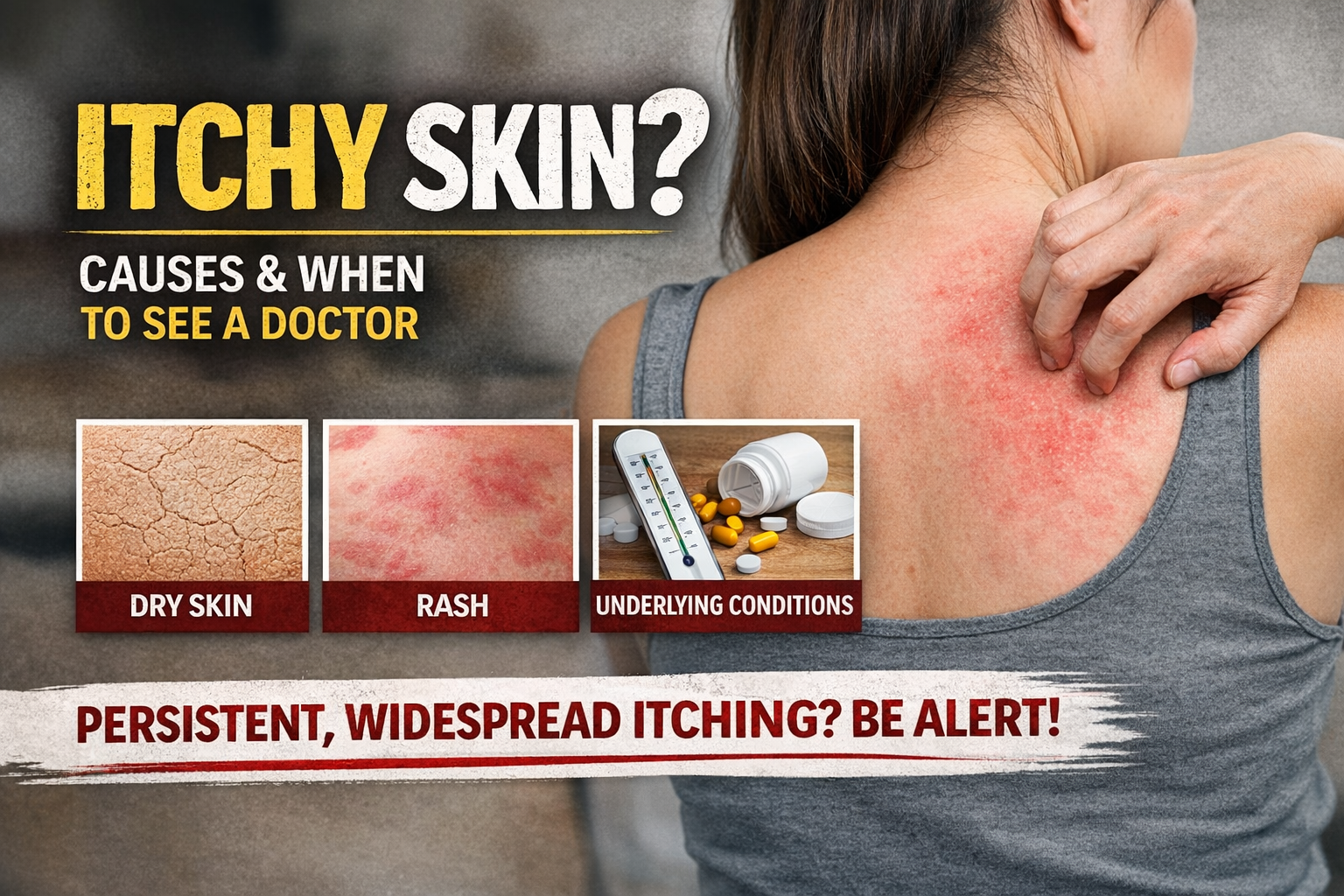
Itchy Skin at Night: Common Causes and What to Do
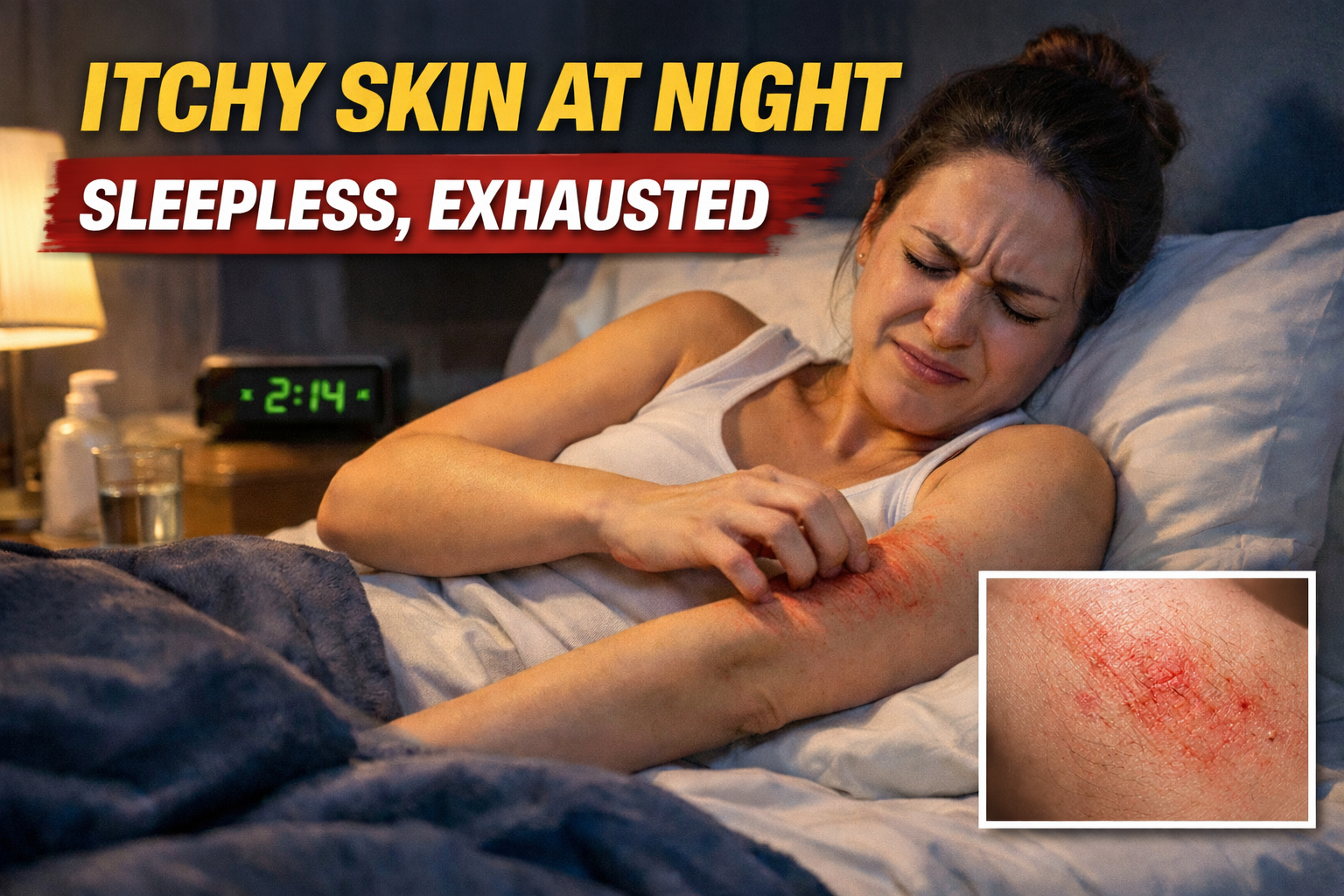
Itchy skin that seems worse at bedtime is a common complaint. For some people, it is a mild annoyance. For others, it can interrupt sleep night after night and make it harder to function the next day.
Doctors may call this nocturnal pruritus, which simply means itching that happens at night or feels more intense then. In many cases, the explanation is fairly common—such as dry skin, eczema, heat, sweating, or irritation from products or fabrics. But persistent itching can sometimes point to a skin disorder or a broader medical issue that should be evaluated.
What itchy skin at night means
Nighttime itching does not always mean a different disease is happening after dark. Often, it means the same skin irritation becomes more obvious once the day slows down.
The medical term pruritus means itching. Nocturnal pruritus refers to itching that either begins mainly at night or becomes noticeably worse in the evening and overnight hours.
That distinction matters. Some people have mild itch all day but only notice how uncomfortable it is when they get into bed. Others feel a clear nighttime flare, especially if heat, sweating, dry air, or certain skin conditions are involved.
Why itching often feels worse after dark
Nighttime itching is not “just in your head.” Several normal body changes can make the skin feel more sensitive in the evening.
The role of circadian rhythm
Your body follows a 24-hour internal clock called the circadian rhythm. This rhythm affects sleep, hormone release, body temperature, and even how the skin behaves.
At night, some natural anti-inflammatory signals become lower, while skin sensitivity may increase. That does not automatically cause itching on its own, but it can make an existing problem feel stronger.
Skin barrier changes, dryness, and heat
The skin works as a barrier that helps hold in moisture and keep irritants out. At night, that barrier may lose water more easily. For people who already have dry or sensitive skin, this can make the surface feel tight, irritated, or itchy.
Heat also matters. Warm blankets, heavy sleepwear, sweating, and a stuffy room can all make itching feel worse. Even when the body is getting ready for sleep, changes in circulation and skin temperature may increase awareness of irritation.
Why the brain notices itch more at night
During the day, work, movement, conversation, and background noise compete for attention. At night, there are fewer distractions. A mild itch that was easy to ignore in the afternoon can feel much more noticeable in a quiet bedroom.
This is one reason nighttime itching can feel intense even when the skin looks only mildly irritated.
Common causes and triggers
The causes of itchy skin at night range from simple dryness to chronic skin conditions and, in some cases, medical illnesses. It helps to start with the most common explanations.
Dry skin and irritation
Dry skin is one of the most frequent reasons itching worsens at night. It is especially common in cold weather, dry indoor air, older adults, and people who shower in very hot water.
Skin that lacks enough moisture tends to itch more when the environment is warm or dry. This may show up as roughness, flaking, tightness, or fine cracking, but sometimes the skin simply feels itchy without dramatic visible changes.
Eczema, psoriasis, and contact reactions
Several skin disorders commonly flare at night.
Eczema (atopic dermatitis) often causes intense itch, dry patches, and inflamed skin. Many people with eczema say bedtime is the hardest part of the day because heat, dry skin, and reduced distraction make the itch-scratch cycle worse.
Psoriasis can also itch, even though many people think of it mainly as a scaly rash. Thickened plaques, skin irritation, and inflammation may become more noticeable overnight.
Contact dermatitis happens when the skin reacts to an irritant or allergen. Possible triggers include detergents, fragranced products, skincare ingredients, fabric treatments, or materials that stay in contact with the skin for hours while sleeping.
Heat, sweat, bedding, and room conditions
A sleeping environment can make a manageable itch feel much worse.
Common triggers include:
- a bedroom that is too warm
- sweating under blankets
- synthetic or non-breathable sleepwear
- detergent or fabric softener residue
- rough fabrics or seams
- low humidity from heating or air conditioning
- dust, pet dander, or other bedroom allergens
This is why nighttime itch is not always about the skin alone. Sometimes the room setup is part of the problem.
Stress, anxiety, and the itch-scratch cycle
Stress does not mean an itch is imaginary. It means the nervous system may be more reactive.
When stress builds up, people may notice more skin sensitivity, more scratching, and more trouble falling asleep. Once scratching starts, the skin becomes more irritated, which leads to more itching. This is known as the itch-scratch cycle.
That cycle can continue even when the original trigger was fairly mild.
Medical conditions that can sometimes be involved
Sometimes nighttime itching is linked to more than the skin itself. Certain medical problems can be associated with generalized itch, sometimes with little or no rash.
Examples may include:
- liver disease
- kidney disease
- thyroid disorders
- diabetes
- iron deficiency or other blood-related conditions
- some inflammatory or systemic illnesses
This does not mean every case of nighttime itching points to something serious. It does mean persistent, unexplained itch should not be dismissed—especially if it is widespread or comes with other symptoms.
What symptoms may help narrow it down
Itching is a symptom, not a diagnosis. Still, the way it appears can offer useful clues.
Itching with a rash
If the itch comes with red patches, bumps, scaling, cracks, hives, or visible inflammation, a skin condition is often higher on the list.
For example:
- dry, inflamed patches may fit eczema
- well-defined scaly plaques may fit psoriasis
- a localized rash may fit a contact reaction
- raised itchy welts may suggest hives
Visible changes do not tell the whole story, but they can help a clinician decide what to check first.
Itching without a visible rash
Itching with little or no rash is not unusual. It may happen with dry skin, early irritation, nerve-related causes, or certain internal medical conditions.
This pattern can be harder to interpret, which is why duration and associated symptoms matter. If there is no obvious rash and the itching is persistent, widespread, or worsening, it is reasonable to get it assessed.
Clues from timing, location, and associated symptoms
A few patterns may help guide the conversation with a clinician:
- Mostly on the arms or legs: may occur with dry skin or eczema
- In skin folds or areas that sweat: irritation, heat, or contact factors may contribute
- Generalized all over the body: may raise concern for a broader trigger
- After showering, sweating, or using new products: irritation or sensitivity may be involved
- With yellowing of the skin, dark urine, fever, or weight loss: medical evaluation is important
These patterns are clues, not proof.
What can happen if it is ignored
Some people try to simply tolerate nighttime itching for weeks or months. That can backfire.
Skin damage and infection risk
Repeated scratching can break the skin. Over time, it may lead to:
- raw or bleeding areas
- thickened skin from chronic rubbing
- darkened or discolored patches
- stinging or pain
- a higher risk of skin infection
Scratching may bring a moment of relief, but it often worsens inflammation afterward.
Sleep loss, fatigue, and quality of life
Nighttime itching is not just a skin issue. It can become a sleep problem.
Poor sleep may lead to:
- daytime fatigue
- poor concentration
- irritability
- lower work performance
- reduced quality of life
For some people, the sleep disruption becomes as distressing as the itch itself.
Everyday habits that may help
These measures are general supportive steps, not a substitute for medical care. They may help reduce irritation and make symptoms easier to track.
Skin care basics
Try to keep the skin barrier supported rather than over-stressed.
Helpful habits may include:
- using a gentle, fragrance-free cleanser
- avoiding very hot showers
- applying a plain moisturizer after bathing
- avoiding harsh scrubs or over-exfoliation
- watching for product triggers if symptoms started after a new lotion, soap, or cosmetic
Simple routines are often easier on sensitive skin than highly active skincare routines.
Bedroom and bedding adjustments
The sleep environment can make a real difference.
Consider:
- keeping the bedroom cool and well-ventilated
- choosing soft, breathable fabrics such as cotton
- washing bedding in a mild detergent
- avoiding heavily fragranced laundry products
- reducing dust buildup in the sleeping area
- using a humidifier if indoor air is very dry
The goal is to reduce heat, friction, dryness, and unnecessary irritants.
Reducing scratching at night
Breaking the itch-scratch cycle is difficult but important.
General strategies may include:
- keeping nails short
- wearing light sleepwear that does not overheat the skin
- using a consistent bedtime routine to lower stress
- noticing early itch triggers before scratching becomes automatic
For some people, the main issue is not the first itch but the repeated scratching that follows.
Tracking patterns and triggers
A basic symptom log can be useful. Note:
- when the itching starts
- where it occurs
- whether there is a rash
- room temperature or dryness
- new detergents, fabrics, or skincare products
- stress, sweat, or exercise
- any associated symptoms
This kind of pattern tracking may help a clinician narrow down the cause more efficiently.
When to see a doctor or seek urgent care
It is worth separating “annoying but non-urgent” from “needs prompt attention.”
When to book a non-urgent appointment
Make a routine medical appointment if:
- the itching lasts more than a couple of weeks
- it keeps coming back
- it regularly interrupts sleep
- the skin is breaking down from scratching
- there is a rash that does not improve
- there is no clear explanation and the itch is getting worse
A clinician may review the skin, symptom pattern, medical history, and possible triggers.
Red flags that should not be ignored
Nighttime itching deserves faster evaluation if it appears with symptoms such as:
- yellowing of the skin or eyes
- dark urine or pale stools
- fever
- night sweats
- unexplained weight loss
- marked fatigue
- swelling
- widespread itch without a clear rash
These features do not confirm a serious condition, but they are not symptoms to brush off.
When urgent medical care may be needed
Seek urgent care right away if itching is part of a possible severe allergic reaction, especially with:
- trouble breathing
- swelling of the lips, tongue, or throat
- dizziness or faintness
- rapidly spreading hives with breathing symptoms
That kind of reaction is different from ordinary chronic nighttime itching and may be an emergency.
Common myths about nighttime itching
“If there is no rash, it is nothing serious”
Not true. Some forms of itch happen with minimal visible skin change. Dry skin, nerve-related causes, and some medical conditions may all present this way.
“It is always just dry skin”
Dry skin is common, but it is not the only explanation. Eczema, contact irritation, heat, stress, and medical illnesses can also play a role.
“Scratching helps fix the problem”
Scratching may briefly reduce the sensation, but it usually worsens skin irritation afterward. Over time, it can make the problem harder to control.
Final takeaway
Itchy skin at night is common, and many cases are linked to dry skin, eczema, irritation, heat, or environmental triggers. Normal nighttime changes in the body can also make itching feel more intense, even when the underlying issue is mild.
Still, persistent or unexplained itching should not be ignored. If the symptom keeps returning, affects sleep, causes skin damage, or appears with broader symptoms such as fever, weight loss, jaundice, or night sweats, a medical evaluation is the safest next step.
The most helpful approach is usually a calm one: look for patterns, reduce obvious irritants, support the skin barrier, and seek professional advice when the symptom is ongoing or unclear.