Genital Itching: Causes, Symptoms, Prevention.
Genital itching is common, but that does not make it easy to talk about. Many adults experience itching in the vulva, vagina, penis, scrotum, groin, or nearby skin at some point in life.
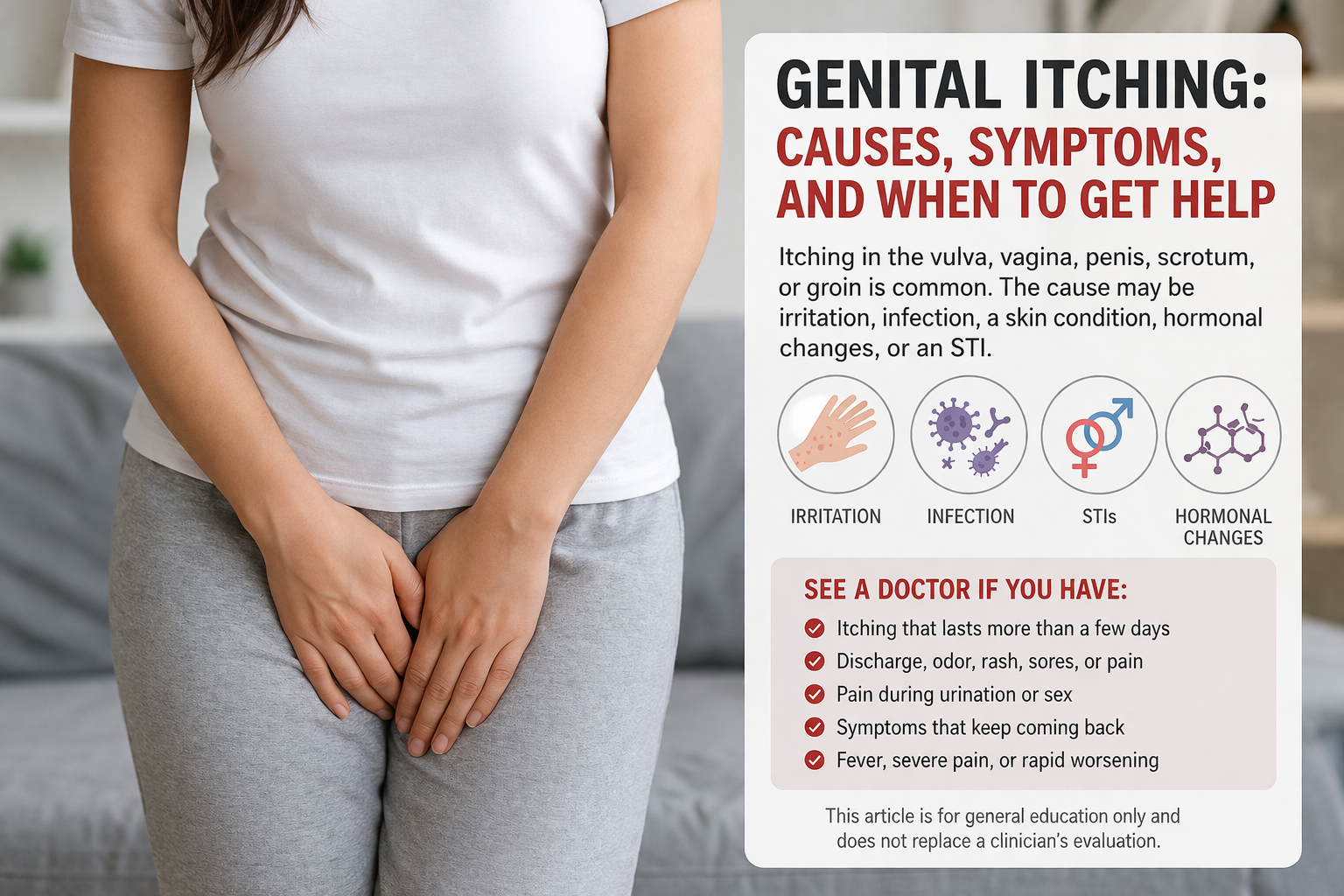
Sometimes the cause is simple, such as irritation from a new product or friction from tight clothing. In other cases, itching can be linked to a skin condition, an infection, hormonal changes, or a sexually transmitted infection (STI). Because the same symptom can have many causes, it helps to look at the full picture rather than guessing based on itching alone.
This article explains what genital itching means, why it happens, what symptoms may come with it, and when it is a good idea to seek medical care. It is for general education only and does not replace a clinician’s evaluation.
What genital itching means
Genital itching refers to an uncomfortable urge to scratch the genital area or nearby skin. Depending on the person, it may affect the vulva, vaginal opening, penis, foreskin, scrotum, groin folds, or the skin around the pubic area.
The itching may be mild and brief, or more persistent and disruptive. Some people describe it as burning, stinging, tingling, rawness, or irritation rather than a classic itch. That difference matters because the symptom can reflect changes in the skin, moisture balance, pH, hormones, or infection.
It is also important to remember that genital itching is not a single disease. It is a symptom with many possible explanations, and those explanations are not always obvious without a proper history and, sometimes, an exam or testing.
Why this area becomes itchy so easily
The genital area is more sensitive than many other parts of the body. The skin is thinner, more exposed to moisture, and often subject to friction from clothing, sweat, exercise, menstrual products, sexual activity, or shaving.
In addition, this region is influenced by a mix of factors:
- Moisture and heat, which can weaken the skin barrier and encourage fungal overgrowth
- Friction, which can irritate already sensitive skin
- Natural microorganisms, which usually live in balance but can shift under certain conditions
- Hormonal changes, which can alter dryness, pH, and tissue sensitivity
- Direct contact with products, such as soaps, wipes, lubricants, detergents, pads, and scented products
When the protective skin barrier becomes irritated or inflamed, itching can follow quickly. Scratching may then worsen the cycle by causing more irritation and small skin breaks.
Common causes and risk factors
Irritation and skin conditions
Many cases of genital itching are not caused by infection at all. They may start with irritation from something that touches the skin.
Common triggers include:
- fragranced soaps or body washes
- bubble baths
- scented pads or liners
- laundry detergents or fabric softeners
- personal wipes
- lubricants or spermicides
- latex
- prolonged dampness
- tight or rough clothing
Skin disorders can also affect the genital area. These include eczema, psoriasis, and contact dermatitis. In these conditions, the skin may look red, inflamed, shiny, dry, cracked, or flaky. On genital skin, some rashes may look different from how they appear elsewhere on the body, which can make self-identification difficult.
Yeast, bacterial, and fungal infections
Yeast overgrowth is one of the best-known causes of genital itching, especially in women. A vaginal yeast infection often causes intense itching along with redness, irritation, and a thick white discharge. Men can also develop yeast-related irritation, especially under the foreskin or around the glans.
Other infections can affect the genital or groin area too. Jock itch is a fungal infection that often involves the groin folds and inner thighs. It may cause a red, itchy rash that spreads outward.
A bacterial imbalance in the vagina, often called bacterial vaginosis, may lead to odor and discharge, and some people also notice mild itching or irritation. Bacterial infections of the skin, including inflamed hair follicles, can also cause itchy bumps or tenderness.
STIs and parasites
Some sexually transmitted infections can cause itching, though itching alone does not confirm an STI. Depending on the infection, a person may also notice burning, sores, discharge, pain during urination, or pain during sex.
Examples include:
- Trichomoniasis, which may cause irritation and abnormal discharge
- Herpes simplex virus, which may begin with tingling or itching before sores appear
- Other infections that may irritate tissues or change the usual balance of the area
Parasites can also be a cause. Pubic lice and scabies are known for significant itching, often worse at night. These conditions may also affect nearby skin beyond the genital area.
Hormonal and life-stage changes
Hormones influence moisture, tissue thickness, and sensitivity. During menopause, falling estrogen levels can lead to vaginal and vulvar dryness, thinning tissue, burning, and itching. These changes may also make the area more vulnerable to irritation.
During pregnancy, hormonal shifts can make yeast overgrowth more likely and may change discharge patterns. Some people also notice cyclical sensitivity related to the menstrual cycle, though recurring symptoms still deserve attention rather than automatic self-diagnosis.
Risk factors that can make itching more likely
Some factors increase the chance of genital irritation or infection:
- antibiotic use
- diabetes
- excess sweating
- obesity
- immunosuppression
- prolonged moisture
- tight or non-breathable clothing
- over-washing or harsh cleansing
- recent product changes
- new sexual partners
- a history of recurrent skin or vaginal problems
A risk factor does not tell you the exact cause, but it can help explain why symptoms may develop or return.
Symptoms that may help narrow the cause
Itching often comes with other signs. Looking at the pattern of symptoms can be more useful than focusing on the itch alone.
Skin changes
Redness, swelling, rash, scaling, cracking, thickened skin, small bumps, or sores can all point to different underlying issues. A rash in the groin folds may suggest fungal involvement, while a more patchy or chronic rash may fit better with a skin condition.
Discharge or odor
Changes in vaginal discharge can be an important clue. Thick white discharge may occur with yeast overgrowth, while a thin discharge with an unusual odor may suggest bacterial imbalance. Still, appearance alone is not enough for a firm diagnosis.
Burning, pain, or stinging
Some people feel more burning than itching. Pain during urination, discomfort after sex, or tenderness of the skin can point to irritation, infection, or tissue dryness.
Nighttime itching
Itching that seems much worse at night can happen with parasite-related causes such as scabies or pubic lice, though it is not exclusive to them.
Symptoms that are easy to misread
Genital symptoms are not always clear-cut. Dryness can feel like itching. Friction can feel like burning. A person may assume “yeast infection” because itching is present, but the true cause may be contact dermatitis, a skin disease, menopause-related tissue changes, or something else entirely.
That is one reason repeat self-treatment is risky, especially when symptoms keep coming back or change over time.
What can happen if it is ignored
Not every brief episode of genital itching is serious. But persistent symptoms should not be brushed aside.
Skin damage from scratching
Repeated scratching can break the skin, leading to rawness, bleeding, more burning, and a higher chance of secondary infection. Once the itch-scratch cycle starts, symptoms can become harder to calm down.
Missed diagnosis
A person may assume the problem is simple irritation and delay care, when the real issue is a fungal infection, bacterial imbalance, STI, chronic skin condition, or hormone-related tissue change that needs appropriate management.
Ongoing discomfort and sleep disruption
Chronic genital itching can affect concentration, sleep, exercise, sexual comfort, and mental well-being. Even when the cause is not dangerous, the effect on quality of life can be significant.
Everyday habits that may help prevent irritation
Prevention is not about “cleaning more.” In many cases, gentler care is better than aggressive care.
Use gentle hygiene
Wash the external area with warm water and a mild, fragrance-free cleanser if needed. Avoid scrubbing. Avoid douching, harsh antiseptics, and scented hygiene products unless a clinician has specifically advised otherwise.
After bathing, exercise, or swimming, dry the area gently. Staying in damp underwear, sweaty workout clothes, or wet swimwear can increase irritation.
Choose breathable clothing
Cotton underwear and loose, breathable fabrics may help reduce moisture and friction. Tight garments can trap heat and sweat, especially in the groin.
Be cautious with new products
If symptoms begin after changing detergent, pads, wipes, lubricant, condoms, or body products, irritation may be part of the picture. It can help to simplify the routine and avoid fragranced or heavily treated products.
Support sexual health
Barrier protection can reduce the risk of some STIs. Open communication with partners and routine sexual health care may also help catch issues earlier. After sex, ongoing burning, swelling, or itching may reflect friction, sensitivity, or infection and should not always be dismissed.
Do not self-treat indefinitely
Over-the-counter products may seem convenient, but repeated use without a clear diagnosis can delay appropriate care and sometimes worsen irritation.
When to see a doctor—and when it is urgent
Schedule a routine medical visit if:
- itching lasts more than a few days and is not improving
- symptoms keep coming back
- the pattern feels different from previous episodes
- there is new discharge, odor, rash, or discomfort during urination or sex
- you recently had a new sexual partner
- you are unsure whether the cause is irritation, infection, or something else
- the problem is affecting sleep, daily comfort, or sexual well-being
A routine visit may include questions about symptoms, product use, sexual history when relevant, and past skin or vaginal issues. Depending on the case, a clinician may also examine the skin or order swabs or other tests.
Seek urgent care promptly if:
- there is severe pain
- you develop fever or chills with genital symptoms
- there is rapid swelling, extensive rash, or signs of an allergic reaction
- sores, blisters, or open lesions appear suddenly
- urination becomes very painful or difficult
- there is pelvic pain, significant bleeding, or fast-worsening symptoms
- you feel generally unwell along with the genital symptoms
These signs do not always mean an emergency, but they should not be ignored.
Common myths about genital itching
Myth: It always means poor hygiene
Not true. In fact, over-cleaning is a common reason symptoms get worse. Harsh soaps, scented products, and frequent washing can disrupt the skin barrier and natural balance of the area.
Myth: It must be a yeast infection
Yeast is only one possibility. Irritant dermatitis, psoriasis, eczema, bacterial imbalance, menopause-related dryness, jock itch, STIs, and parasites can also cause itching.
Myth: It always means an STI
Genital itching can happen with STIs, but many non-sexual causes are far more common. Assuming every case is sexual in origin can add unnecessary fear and delay proper evaluation.
Myth: If a product helps once, it is the right answer every time
Symptoms can look similar even when the cause changes. A cream or wash that seemed to help before may not fit the current problem and could even make it worse.
Myth: If there is no discharge, it is nothing serious
Some conditions cause itching with little or no discharge. Skin disorders, parasites, friction, dryness, or early infection can still be important to assess.
Conclusion
Genital itching is a common symptom with many possible causes, including irritation, skin conditions, infections, hormonal changes, and some STIs. The most useful approach is to look beyond the itch itself and pay attention to the full pattern of symptoms, including rash, discharge, odor, pain, sores, and how long the problem has lasted.
Gentle care, breathable clothing, moisture control, and avoiding fragranced products may help reduce irritation in some cases. But persistent, recurrent, or severe symptoms deserve professional evaluation, especially when they come with red flags such as pain, fever, unusual discharge, sores, or trouble urinating.