Diverticulosis: Symptoms, Causes, Risk Factors, and When to Seek Medical Care
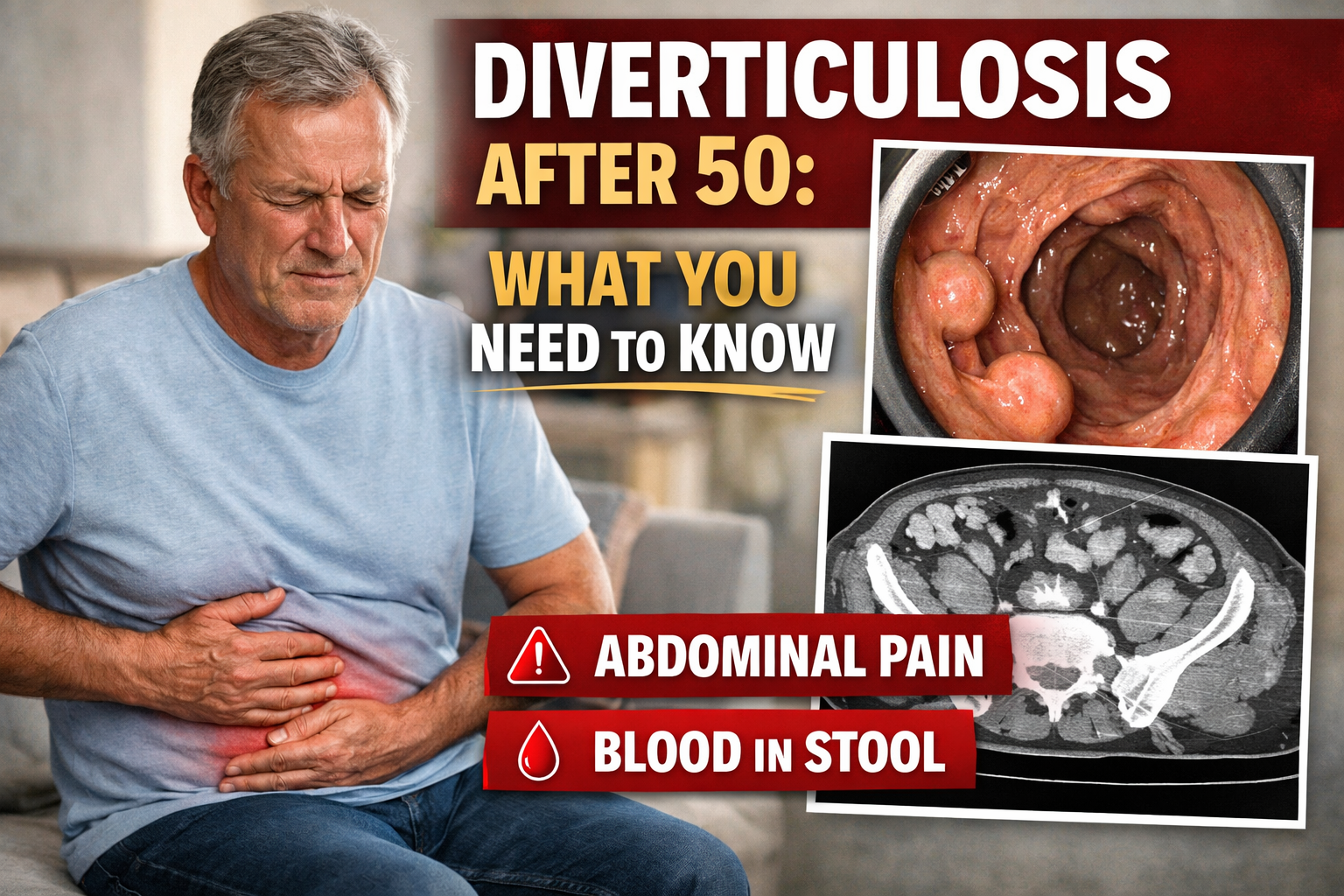
Diverticulosis is one of the most common digestive findings in midlife and older age, especially in Western countries. In the United States, more than 30% of adults ages 50 to 59 have diverticulosis, and the figure rises to over 70% after age 80. Most people never know they have it until it appears on a colonoscopy or scan done for another reason.
Even so, it helps to understand what diverticulosis is, what symptoms can happen, why it develops, and which signs should never be ignored. While diverticulosis itself is often harmless, it can sometimes overlap with digestive symptoms or lead to complications such as diverticulitis or bleeding.
This guide explains the condition in plain English for a US/UK audience, with a practical focus on prevention, symptom awareness, and knowing when to speak to a clinician.
What is diverticulosis?
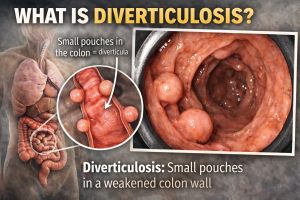
Diverticulosis means there are small pouches in the wall of the colon, called diverticula. The colon is the large intestine, and these pouches tend to form where the bowel wall is weaker. Having the pouches is called diverticulosis. If one or more of them become inflamed or infected, that is called diverticulitis.
These pouches are common with age. They usually develop gradually over many years rather than all at once. In many people, they are found in the lower part of the colon, especially on the left side, although right-sided symptoms may be more common in some groups, including some people of Asian origin.
A key point is that diverticulosis is not the same as diverticulitis. Many people hear the terms used interchangeably, but they describe different situations:
- Diverticulosis: pouches are present, often with no symptoms
- Diverticular disease: pouches plus digestive symptoms
- Diverticulitis: pouches become inflamed or infected, usually causing more severe illness
How common is diverticulosis?
Diverticulosis becomes much more common with age. US government data show that it affects more than 30% of adults ages 50 to 59 and more than 70% of those older than 80. UK sources also describe it as rare before age 40 and increasingly common later in life, with some estimates approaching 80% in people over 85.
The condition is seen far more often in industrialised countries than in populations eating more traditional, less processed diets. That pattern strongly suggests lifestyle and diet play a major role.
Diverticulosis symptoms: what you may notice
Most people with diverticulosis have no symptoms at all. That is why it is often described as an incidental finding rather than a disease people actively feel.
When symptoms do happen, they are usually mild and can overlap with other bowel problems. Possible symptoms include:
1. Mild abdominal discomfort
Some people notice an off-and-on ache, cramping, or a sense of pressure in the lower abdomen. This is often reported on the left side, but location can vary.
2. Bloating
A swollen or gassy feeling after meals may occur, especially if your bowel habits have also changed.
3. Changes in bowel habits
Constipation, diarrhoea, or alternating between the two can happen. Some people also feel they have not fully emptied their bowels.
4. Occasional tenderness
A mild sensitivity in one area of the lower abdomen may appear from time to time, though pronounced or persistent pain is more concerning for diverticulitis than simple diverticulosis.
Symptoms of diverticulosis vs diverticulitis
This distinction matters because the symptoms are not on the same level.
Diverticulosis may cause no symptoms or only mild digestive discomfort.
Diverticulitis is more likely to cause:
- stronger, often persistent abdominal pain
- fever or chills
- nausea or vomiting
- constipation or diarrhoea during an acute episode
- feeling generally unwell
If symptoms suddenly become severe, it should not be assumed to be “just diverticulosis.”
What causes diverticulosis?
There is no single cause, but doctors and researchers generally view diverticulosis as the result of pressure inside the colon plus age-related changes in the bowel wall, with diet and lifestyle influencing both.
Low-fibre diets
A diet low in fibre can lead to smaller, harder stools and slower transit through the colon. Over time, this may increase pressure inside the bowel, which may help those pouches form. Although experts still study the exact mechanism, low fibre remains a widely recognised contributor in diverticular disease.
Ageing of the colon wall
As people age, connective tissues naturally change. The bowel wall may become less resilient, making pouch formation more likely over decades. The strong age pattern seen in both US and UK data supports this.
Pressure within the bowel
When the colon has to work harder to move stool along, pressure may build in certain segments, especially where the bowel is narrower. This pressure is thought to help push the inner lining outward through weak spots.
Genetics
Genes appear to matter too. NICE notes that genetics may account for around 40% to 50% of susceptibility in some people, which helps explain why family history can increase risk even before lifestyle is considered.
Risk factors for diverticulosis
Some risks cannot be changed, while others are closely linked to everyday habits.
Age
Age is the strongest risk factor. Diverticulosis is uncommon before 40 and much more common after 50.
Family history and inherited susceptibility
If close relatives have diverticular disease, your own risk may be higher. Genetics do not guarantee you will develop it, but they can increase susceptibility.
Low fibre intake
A low-fibre eating pattern is one of the most frequently cited lifestyle risks in diverticular disease.
High red meat intake
NIDDK notes that diets high in red meat may increase the risk of diverticular problems, while higher-fibre eating patterns may lower it.
Physical inactivity
Regular physical activity appears protective, while inactivity is linked with poorer bowel function and higher diverticular risk over time.
Smoking
Smoking is associated with a higher risk of diverticular complications, and quitting is part of standard prevention advice.
Higher body weight
Maintaining a healthy weight is also part of lifestyle advice aimed at lowering risk of diverticular complications.
Are nuts, seeds, and popcorn really a problem?
This is one of the most common questions, and the old advice has changed.
In the past, many people were told to avoid nuts, seeds, and popcorn because of a theory that small food particles could get trapped in diverticula and trigger inflammation. Current guidance does not support routinely avoiding these foods. The American Gastroenterological Association advises against routinely telling patients to avoid seeds, nuts, and popcorn, and GI patient guidance also states they do not need to be cut out just because someone has diverticular disease.
That said, individual tolerance still matters. A food that personally worsens your symptoms may be worth limiting, but blanket restrictions are no longer standard advice.
Can diverticulosis be reversed?
No. Once diverticula have formed, they do not usually disappear on their own. However, that does not mean the condition must worsen or lead to complications. Many people live with diverticulosis for years without major problems.
The goal is not to “erase” the pouches. The goal is to support bowel health and reduce the chances of future symptoms, inflammation, or bleeding.
When should you seek medical attention?
Because mild digestive symptoms can have many causes, it is wise to speak to a clinician if symptoms are persistent, changing, or affecting quality of life.
Book a routine medical review if you have:
- repeated abdominal discomfort
- ongoing bloating
- a noticeable change in bowel habits
- symptoms that keep returning
- a family history of bowel disease and new digestive symptoms
Seek urgent medical care if you have:
- severe or constant abdominal pain
- fever with abdominal pain
- nausea or vomiting that does not settle
- blood in the stool
- black, tarry stools
- marked abdominal swelling
- inability to pass stool or gas
These features may point to diverticulitis, bleeding, obstruction, or another urgent bowel condition.
How diverticulosis is diagnosed
Diverticulosis is often found during:
- colonoscopy
- CT scan of the abdomen or pelvis
- less commonly, other bowel imaging
In many cases, there are no warning symptoms beforehand.
For average-risk adults in the US, the American Cancer Society recommends starting regular colorectal cancer screening at age 45. In England, the NHS bowel cancer screening programme is being expanded and now routinely invites people 54 to 74, while continuing rollout toward ages 50 and over.
A colonoscopy done for screening may be the first time someone learns they have diverticulosis.
Living well with diverticulosis
For most people, diverticulosis does not stop them from living normally. You can usually work, travel, exercise, and eat a varied diet with very few restrictions.
Helpful habits include:
Build fibre gradually
Aim for a diet that includes fruits, vegetables, beans, lentils, oats, and whole grains. Increase fibre slowly and drink enough fluids so your gut can adjust comfortably. Higher-fibre eating patterns are consistently linked with better bowel health.
Stay active
Walking, cycling, swimming, and other regular activity can support bowel motility and general digestive health.
Avoid smoking
Smoking is linked with worse digestive outcomes across many conditions, including diverticular disease.
Review regular NSAID use with a clinician
Guidance suggests caution with non-aspirin NSAIDs in people with diverticular disease because of a possible link with complications.
Learn your own symptom pattern
Not every episode of bloating or cramping means something serious. But if your pattern changes, becomes more intense, or comes with fever or bleeding, get assessed.
Frequently asked questions
Is diverticulosis dangerous?
Usually, no. Most people have no symptoms and never develop a major complication. But severe pain, fever, or bleeding should always be checked quickly.
Does diverticulosis always turn into diverticulitis?
No. Most people with diverticulosis do not go on to develop diverticulitis.
Can younger adults get diverticulosis?
Yes, but it is less common before age 40. Risk rises steadily with age.
Should I cut out nuts and seeds?
Not routinely. Current guidance does not support avoiding them just because you have diverticulosis.
Is stress the cause?
Stress is not considered the main cause of diverticulosis, but it can worsen digestive symptoms and bowel comfort in some people.
The bottom line
Diverticulosis is common, especially after 50, and in most cases it is more of a long-term bowel finding than a serious illness. It happens when small pouches form in the colon wall, usually over many years. Age, genetics, low fibre intake, inactivity, smoking, higher body weight, and dietary patterns all appear to influence risk.
The most important thing to remember is this: diverticulosis itself is often silent, but severe pain, fever, or rectal bleeding are not symptoms to ignore. Knowing the difference can help you act early and protect your digestive health.