Renal Artery Stenosis: Symptoms, Risks, and Red Flags
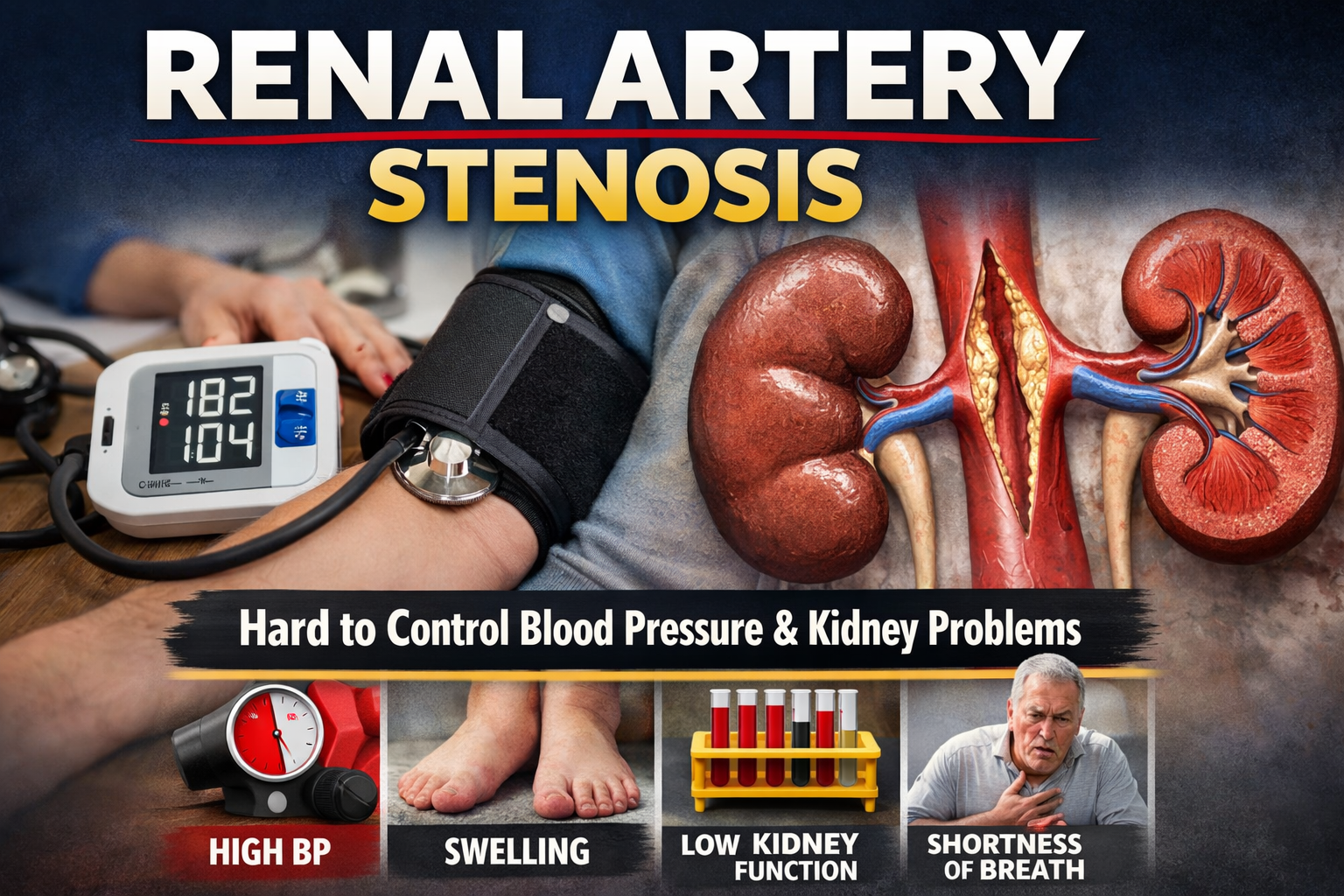
Renal artery stenosis means that one or both arteries carrying blood to the kidneys have become narrowed. That reduced blood flow can affect how the kidneys work and may contribute to high blood pressure that is difficult to control.
Many people do not notice obvious symptoms at first. Because of that, the condition is often discussed in the context of hard-to-manage hypertension, declining kidney function, or broader vascular disease rather than a single clear symptom.
This article explains the condition in plain English. It covers what it is, why it matters, who is at higher risk, common warning signs, possible complications, and when medical evaluation is especially important.
- Renal artery stenosis is a narrowing of the arteries that supply blood to the kidneys.
- It may be linked to high blood pressure that is new, severe, or difficult to control.
- Some people have few or no early symptoms, which is why it can be missed.
- Common causes include atherosclerosis and fibromuscular dysplasia.
- If left unrecognized, it can contribute to kidney damage and cardiovascular problems.
- Persistent blood pressure changes, worsening kidney function, swelling, or shortness of breath deserve medical attention.
What renal artery stenosis actually means
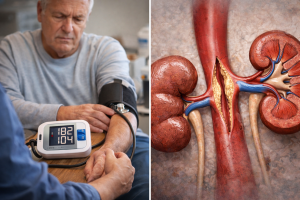
Renal artery stenosis is a blood vessel problem, not simply a disease that starts inside the kidney tissue. The issue begins when the artery feeding the kidney becomes narrower, which can reduce the amount of oxygen-rich blood reaching that organ.
This can happen in one kidney or both. If only one side is affected, the other kidney may continue to work normally for some time. If both renal arteries are narrowed, the chance of more serious effects on blood pressure and kidney function is generally higher.
It helps to think of the renal arteries as supply lines. When those supply lines are narrowed, the kidney may react as if the body is not getting enough blood flow, even when the problem is really in the artery itself.
Why blood flow to the kidneys matters
The kidneys filter waste, help balance fluids and minerals, and take part in hormone systems that influence blood pressure. To do all of that well, they need a steady blood supply.
The renal arteries are the main blood vessels delivering that supply. When one of these arteries becomes narrowed, the kidney may interpret the reduced flow as a signal that blood pressure is too low. In response, the body can activate pathways that push blood pressure higher.
That is one reason renal artery stenosis is often discussed alongside resistant hypertension, meaning blood pressure that remains above target despite appropriate treatment. In some cases, the kidney is not “causing” hypertension in isolation, but the reduced blood flow is contributing to the overall problem.
What causes the narrowing
Atherosclerosis
The most common cause is atherosclerosis, a process in which fatty deposits, inflammatory material, and calcium build up inside artery walls. Over time, this can narrow the opening of the artery and make blood flow less efficient.
This form of renal artery stenosis is more often seen in older adults, especially those who also have risk factors such as smoking, diabetes, high cholesterol, or known cardiovascular disease.
Atherosclerosis does not usually affect only one area of the body. Someone with plaque in the arteries of the heart, legs, or neck may also have disease in the arteries supplying the kidneys.
Fibromuscular dysplasia
Another important cause is fibromuscular dysplasia, often shortened to FMD. This is different from plaque buildup. Instead, it involves abnormal growth in the artery wall itself, which can create areas of narrowing.
FMD is more often associated with younger adults, particularly women. It is a key reason why renal artery stenosis should not be thought of as a condition that affects only older people.
Less common causes
Less common causes include inflammatory diseases affecting blood vessels, congenital or developmental abnormalities, scarring after procedures, and delayed damage after radiation to the abdominal area.
These causes are less frequent, but they matter because the clinical picture may look different depending on the person’s age, medical history, and the underlying process.
Who is more likely to develop it
Risk is not the same for everyone. Some factors are related to age or biology, while others are tied to overall vascular health.
People may be at higher risk if they have:
- older age, especially with other signs of vascular disease
- high blood pressure
- high cholesterol
- diabetes
- smoking history
- obesity
- low physical activity
- coronary artery disease
- peripheral artery disease
- prior stroke or other signs of systemic atherosclerosis
Family history can also matter, particularly when it reflects a broader pattern of early cardiovascular disease, kidney disease, or inherited vascular tendencies.
In younger adults, especially younger women with unexplained high blood pressure, clinicians may think about fibromuscular dysplasia as a possible contributor.
Symptoms and why they can be easy to miss
One of the challenges with renal artery stenosis is that it may not cause dramatic symptoms early on. A person can have significant narrowing before anything clearly points to the kidneys.
Why early disease may be silent
The kidneys are remarkably adaptable. If only one artery is affected, the other kidney may continue to carry much of the workload. Even when blood flow is reduced, the body may compensate for a while before obvious symptoms appear.
That means the earliest clues are often found not in how someone feels, but in blood pressure patterns or lab changes.
Common warning signs
A common clue is blood pressure that becomes hard to control. This may show up as:
- hypertension that appears suddenly
- blood pressure that worsens after previously being stable
- blood pressure that remains high despite several medications
- severe hypertension in a younger adult or in an older adult with a new change from baseline
Some people may also have headaches related to high blood pressure, although headaches alone are not specific to this condition.
Symptoms that may suggest kidney strain or fluid buildup
As the condition becomes more significant, symptoms may reflect changes in kidney function or fluid balance. These can include:
- swelling in the legs or ankles
- fatigue
- shortness of breath
- reduced urine output
- nausea or poor appetite
- a general sense that blood pressure and fluid retention are worsening together
These symptoms are not unique to renal artery stenosis. They are simply signs that the kidneys or cardiovascular system may be under strain and deserve proper evaluation.
What can happen if it is overlooked
Renal artery stenosis does not always progress quickly, and not everyone develops severe complications. Still, when the condition is significant or unrecognized for too long, it can affect both kidney health and the cardiovascular system.
Effects on kidney function
Reduced blood flow can contribute to chronic kidney damage over time. In some cases, the affected kidney may shrink because it is not receiving enough blood supply. If both kidneys are involved, the risk of major loss of kidney function is more concerning.
Not every person with renal artery stenosis develops kidney failure. The degree of narrowing, whether one or both arteries are involved, and the person’s overall health all influence the outlook.
Effects on the heart and circulation
Persistent or poorly controlled hypertension can increase strain on the heart and blood vessels. Over time, that can raise the risk of:
- heart failure
- stroke
- progression of other vascular disease
- fluid overload affecting breathing and daily function
This is why renal artery stenosis is often considered not just a kidney issue, but part of a larger vascular health picture.
Prevention and everyday habits that support vascular health
There is no guarantee that lifestyle habits alone can prevent every case, especially when anatomy or fibromuscular dysplasia is involved. Still, the day-to-day factors that support artery health are important.
Habits that support artery health
General habits that may help lower vascular risk include:
- avoiding smoking
- staying physically active within one’s health limits
- following a heart-healthy eating pattern
- managing cholesterol, blood sugar, and blood pressure
- maintaining a healthy weight when possible
- keeping up with routine medical care
These measures are especially relevant when renal artery stenosis is related to atherosclerosis, since that process is closely connected to overall cardiovascular risk.
Why regular follow-up matters
For people at higher risk, simple follow-up patterns can matter a great deal. Regular blood pressure checks and periodic kidney function testing may reveal a problem before it causes major symptoms.
Someone who already has coronary artery disease, peripheral artery disease, diabetes, or resistant hypertension should be especially attentive to ongoing care. Monitoring does not diagnose the condition by itself, but it can help identify when further evaluation is needed.
When to seek medical care right away
Some situations call for routine medical review, while others deserve urgent attention.
Reasons to book a medical evaluation
Consider medical assessment if you notice:
- blood pressure that is newly high or increasingly hard to control
- a sudden need for multiple blood pressure medicines
- unexplained worsening kidney function on lab tests
- swelling, fatigue, or reduced urine output without a clear reason
- severe hypertension at a young age
- a major change in blood pressure later in life after years of stability
These signs do not prove renal artery stenosis. They do mean there may be an underlying cause that should not be ignored.
Red flags that need urgent attention
Seek urgent care if symptoms suggest a more serious complication, such as:
- severe shortness of breath
- chest pain
- confusion
- sudden weakness, numbness, or trouble speaking
- signs of dangerously high blood pressure
- rapid swelling or major fluid retention
- a sudden sharp decline in overall condition
These problems can have many causes, but all warrant prompt medical evaluation.
Common myths about renal artery stenosis
Myth: “If I feel fine, my kidneys must be fine.”
Not always. Renal artery stenosis can be silent for quite a while. Some people first learn about a possible issue because of blood pressure readings or kidney lab results, not symptoms.
Myth: “This only happens in older adults.”
Older adults are more likely to have the atherosclerotic form, but younger people can also be affected, especially in connection with fibromuscular dysplasia.
Myth: “All kidney disease starts inside the kidney.”
Not necessarily. Some kidney problems begin with the kidney tissue itself, but renal artery stenosis starts with the blood supply to the kidney.
Myth: “High blood pressure is the only thing that matters.”
High blood pressure is an important clue, but it is not the whole story. Kidney function, fluid balance, and broader cardiovascular risk also matter.
Myth: “Every case leads to kidney failure.”
No. Some people remain stable for long periods, particularly when the condition is recognized and monitored. Risk varies from person to person.
The bottom line
Renal artery stenosis is a narrowing of the arteries that carry blood to the kidneys. It may be silent at first, but it can be linked to hard-to-control high blood pressure, changes in kidney function, and increased cardiovascular risk.
The condition is most often associated with atherosclerosis or fibromuscular dysplasia. People with resistant hypertension, vascular disease, diabetes, high cholesterol, or smoking history may have a higher chance of being affected.
The safest takeaway is practical: do not ignore persistent blood pressure changes, unexplained kidney test changes, swelling, or shortness of breath. These signs do not confirm renal artery stenosis, but they are good reasons to seek medical evaluation and discuss the next steps with a qualified clinician.