Hiatal Hernia: Symptoms, Causes, and Risk Factors
Hiatal Hernia: Symptoms, Causes, and Risk Factors
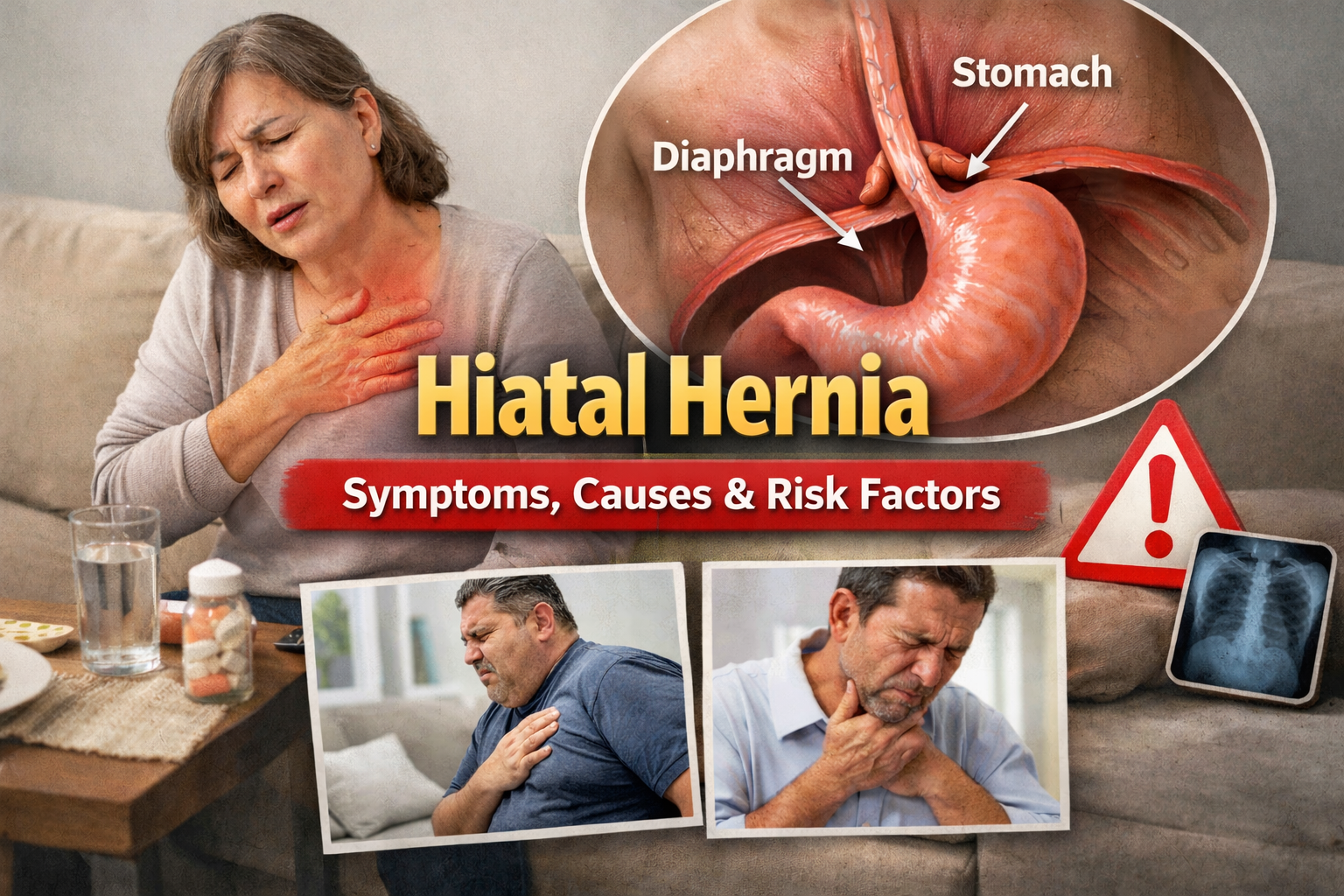
A hiatal hernia happens when part of the stomach moves upward through the diaphragm, the muscle that separates the chest from the abdomen. Many people never notice it. Others develop symptoms such as heartburn, regurgitation, chest discomfort, or trouble swallowing.
Because the condition is common and often overlaps with acid reflux, it can be confusing. A clear understanding of what a hiatal hernia is, why it happens, and which symptoms matter can make it easier to know when general self-care may help and when medical evaluation is important.
- A hiatal hernia occurs when part of the stomach pushes through the opening in the diaphragm.
- Some people have no symptoms, while others develop reflux, chest discomfort, bloating, or swallowing problems.
- Age, increased pressure in the abdomen, excess body weight, pregnancy, chronic coughing, and connective tissue weakness can all play a role.
- The most common type is a sliding hiatal hernia, which is often linked with acid reflux symptoms.
- Severe chest pain, persistent vomiting, trouble swallowing that is getting worse, or sudden breathing difficulty should be assessed promptly.
What a hiatal hernia actually is
The esophagus carries food from the mouth to the stomach. Before it reaches the stomach, it passes through a small opening in the diaphragm called the esophageal hiatus.
Normally, the stomach stays below the diaphragm. In a hiatal hernia, part of the stomach moves upward through that opening. That shift may be small and cause no symptoms, or it may interfere with the normal barrier that helps keep stomach contents from moving back into the esophagus.
This is why hiatal hernia is often discussed alongside reflux symptoms. The condition is not always dramatic, and in many cases it is found during testing done for another reason.
Why it can cause reflux and other symptoms
At the lower end of the esophagus is a muscular valve called the lower esophageal sphincter (LES). Its job is to help keep stomach acid where it belongs.
When part of the stomach moves above the diaphragm, the position and pressure of that valve can change. As a result, acid may move upward more easily. This can lead to heartburn, sour-tasting regurgitation, or irritation in the esophagus.
Symptoms also tend to follow patterns. They may feel worse:
- after a large meal
- when lying down soon after eating
- when bending forward
- during straining or heavy lifting
Gravity and pressure both matter. A fuller stomach and a more horizontal body position make upward flow more likely.
Main types of hiatal hernia
Sliding hiatal hernia
This is the most common type. The area where the esophagus joins the stomach slides upward through the diaphragm and may move back down again.
Sliding hiatal hernias are often associated with reflux symptoms, but not everyone with this type feels unwell.
Paraesophageal and less common forms
In a paraesophageal hernia, the stomach pushes upward next to the esophagus while the junction between the esophagus and stomach may stay closer to its usual position.
These forms are less common but can matter more clinically because part of the stomach may become trapped. Larger or more complex hernias can involve more of the stomach, and in rare cases other abdominal organs may move upward as well.
For general readers, the most important point is simple: the type of hernia can affect how likely it is to cause symptoms or complications.
Causes and risk factors
A hiatal hernia usually develops from a combination of tissue weakness and pressure from below.
Tissue changes and structural weakness
Over time, the tissues around the hiatus can lose strength and elasticity. Age is one of the clearest risk factors for this reason.
Some people may also have a built-in tendency toward weaker connective tissue. A family history does not guarantee a hiatal hernia, but it may increase susceptibility.
Increased pressure inside the abdomen
Anything that repeatedly raises pressure in the abdomen can contribute. Examples include:
- excess body weight
- pregnancy
- chronic coughing
- repeated vomiting
- frequent straining during bowel movements
- heavy lifting, especially with poor technique
Pressure alone does not explain every case, but it is a common part of the picture.
Other factors that may raise risk
Several additional factors may make a hiatal hernia more likely or may worsen symptoms once it is present:
- getting older
- smoking
- chronic constipation
- chronic lung disease associated with coughing
- long-term habits that increase abdominal strain
These are not all equally important for every person. In practice, hiatal hernia tends to emerge when multiple factors overlap.
Common symptoms and less obvious signs
Not everyone with a hiatal hernia has symptoms. When symptoms do happen, they can range from mild and occasional to disruptive enough to affect daily life.
Typical digestive symptoms
Common symptoms include:
- heartburn
- acid reflux
- regurgitation of food or sour liquid
- chest discomfort after eating
- trouble swallowing
- feeling overly full after small meals
- bloating or frequent belching
Many of these symptoms overlap with GERD, which is one reason the two conditions are often discussed together.
Less specific symptoms
Some people notice symptoms that feel less obviously digestive, such as:
- upper chest pressure
- mild shortness of breath after meals
- throat irritation
- an ongoing sensation of fullness or pressure
- discomfort that worsens when bending over
These symptoms are not unique to hiatal hernia. They can also occur with other digestive, throat, lung, or heart-related conditions, which is why persistent or unclear symptoms deserve proper assessment.
Why some people have no symptoms
A hiatal hernia can be present without causing any noticeable problem. The size of the hernia does not always match how severe the symptoms feel.
In other words, a person may have a small hernia and frequent reflux, while someone else may have a larger hernia and little discomfort. Symptoms depend on anatomy, reflux tendency, pressure changes, and individual sensitivity.
What can happen if it is ignored
A small hiatal hernia without symptoms may not cause meaningful problems. But when reflux is frequent or the hernia is larger, complications can become more relevant.
Ongoing reflux and irritation
If stomach acid repeatedly reaches the esophagus, it can irritate the lining. Over time, that may lead to:
- esophagitis, meaning inflammation of the esophagus
- worsening pain with swallowing
- chronic irritation in the chest or throat
- narrowing or damage in more severe cases
Long-standing reflux may also require medical review to assess the esophagus more carefully.
When the stomach becomes trapped
With less common types, especially paraesophageal hernias, part of the stomach can become stuck. In more serious cases, it may twist or lose blood supply.
This is one reason hiatal hernia should not be dismissed as “just heartburn” in every situation. Most cases are not emergencies, but some symptoms can signal that the pattern has changed.
Everyday habits that may help
Lifestyle measures do not “cure” the anatomical change, but they may reduce pressure and make symptoms easier to manage.
Meal habits and timing
These strategies may help some people:
- eat smaller meals rather than very large ones
- avoid lying down for two to three hours after eating
- eat more slowly and chew thoroughly
- notice which foods seem to trigger symptoms personally
Common symptom triggers may include spicy meals, very fatty foods, chocolate, citrus, tomato-based foods, caffeine, peppermint, and alcohol. These triggers vary from person to person, so a symptom diary can be more useful than a long list of rules.
Body position and daily habits
A few practical adjustments may also help:
- elevate the head of the bed if nighttime reflux is a problem
- maintain a body weight that supports overall health
- reduce chronic straining when possible
- use safer lifting mechanics
- avoid clothing that feels very tight around the waist
Movement and exercise
Exercise is not automatically harmful. In fact, gentle activity may support weight management and general digestion.
Walking, swimming, and other low-impact exercise are often better tolerated than activities that involve heavy straining, intense abdominal pressure, or vigorous bending immediately after meals.
When to see a doctor or seek urgent care
A hiatal hernia may be manageable, but some symptoms should not be ignored.
Symptoms worth discussing with a clinician
Consider medical evaluation if you have:
- frequent heartburn or reflux
- chest discomfort that recurs after meals
- trouble swallowing
- regurgitation that happens often
- symptoms that disturb sleep
- unexplained weight loss
- symptoms that are getting more frequent or more intense
These signs do not confirm a hiatal hernia on their own, but they are good reasons to discuss what is going on.
Red flags that need prompt or urgent assessment
Seek urgent medical care if you develop:
- sudden or severe chest pain
- persistent vomiting
- inability to keep fluids down
- trouble breathing
- severe abdominal pain
- inability to pass gas or have a bowel movement along with significant pain
- swallowing difficulty that rapidly worsens
These symptoms can have many possible causes, including conditions that are not digestive. Chest pain in particular should not be self-diagnosed.
Common myths about hiatal hernia
Myth: “It always causes symptoms”
Not true. Many hiatal hernias are found by chance, and some never cause clear symptoms.
Myth: “It is the same thing as GERD”
They are related, but not identical. A hiatal hernia can make reflux more likely, but not every person with GERD has a hiatal hernia, and not every person with a hiatal hernia has GERD symptoms.
Myth: “If symptoms are mild, it can never matter”
Mild symptoms may stay mild, but patterns can change. Persistent reflux, worsening swallowing problems, or new chest discomfort still deserve attention.
Myth: “Exercise should be avoided completely”
Not usually. The issue is not all movement. The main concern is activity that sharply raises abdominal pressure or repeatedly triggers symptoms.
FAQ
Can a hiatal hernia go away on its own?
In general, it is considered a structural change and does not usually reverse on its own. Symptoms, however, may improve with lifestyle changes or medical care when appropriate.
Is hiatal hernia dangerous?
Often, no. Many cases are mild or symptom-free. The concern is greater when symptoms are persistent, reflux is causing damage, or a less common hernia type becomes trapped.
Can a hiatal hernia cause chest pain?
Yes, it can cause chest discomfort or pain-like symptoms, especially with reflux. But chest pain can also come from heart, lung, or other causes, so it should not be assumed to be digestive without proper evaluation.
Can you prevent a hiatal hernia from getting worse?
You may not be able to fully prevent progression, but reducing abdominal pressure, managing body weight, avoiding repeated straining, and addressing chronic cough or constipation may help.
What foods commonly trigger symptoms?
Common triggers include spicy foods, fatty meals, chocolate, caffeine, peppermint, citrus, tomatoes, and alcohol. Still, personal triggers vary, so individual tracking is more useful than blanket restriction.
Does every hiatal hernia need treatment?
Not necessarily. People without symptoms may only need monitoring and clinical follow-up if advised. Treatment decisions depend on symptoms, hernia type, severity, and whether complications are suspected.
Bottom line
A hiatal hernia is a common condition in which part of the stomach moves upward through the diaphragm. For some people it causes no problems at all. For others, it contributes to reflux, chest discomfort, bloating, early fullness, or trouble swallowing.
The condition often develops through a mix of age-related tissue change and increased pressure in the abdomen. Knowing the symptoms, the common risk factors, and the warning signs can help you respond appropriately without overreacting.
General habits such as smaller meals, staying upright after eating, avoiding repeated strain, and tracking symptom triggers may help reduce discomfort. But severe pain, persistent vomiting, breathing difficulty, or worsening swallowing problems should be medically assessed rather than self-managed.