Kidney Stones: Causes, Symptoms, and Risk Factors
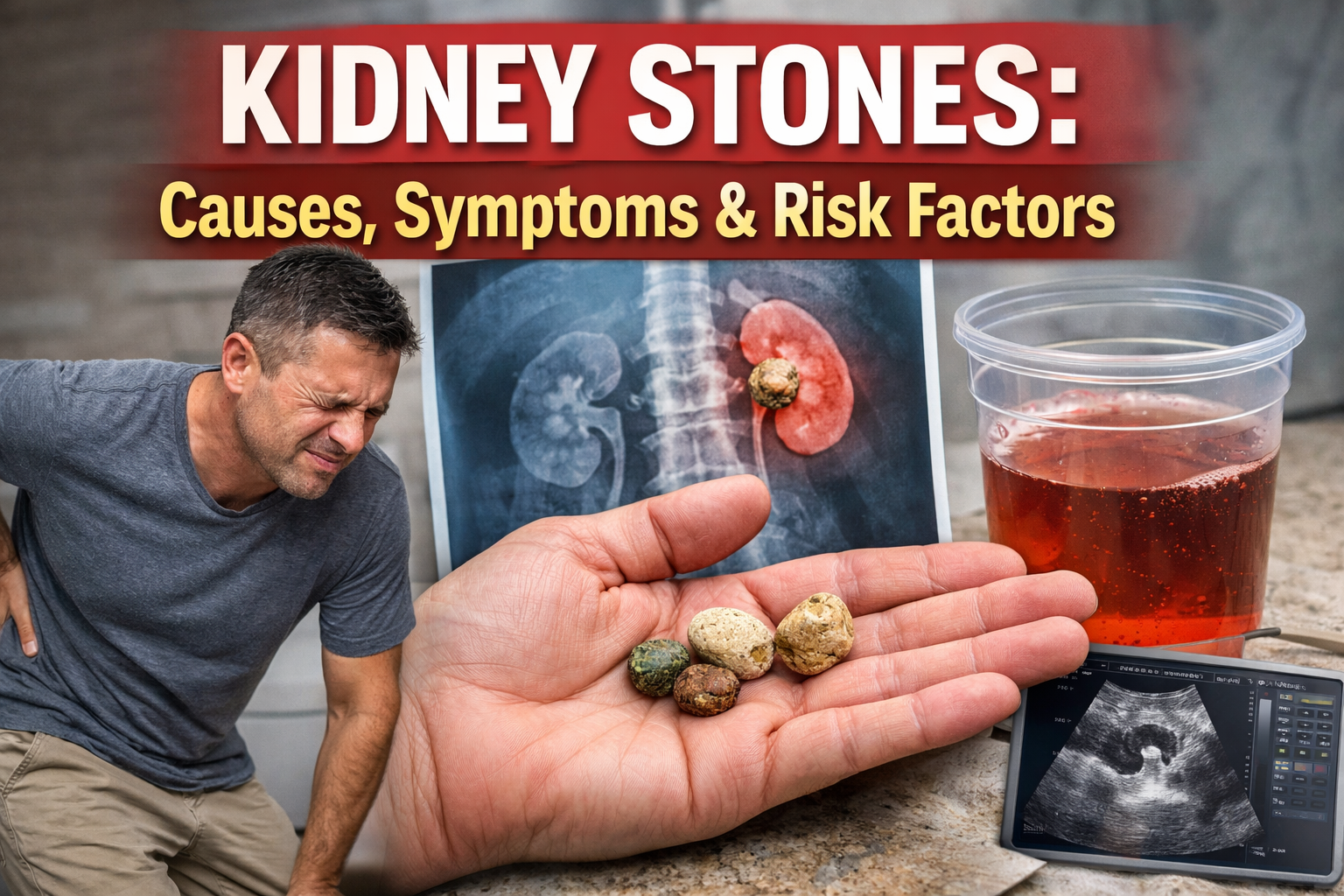
Kidney Stones: Causes, Symptoms, and Risk Factors
Kidney stones are a common urinary tract problem, but many people do not think about them until pain suddenly starts. Some stones cause little or no discomfort at first, while others lead to severe flank pain, blood in the urine, nausea, or trouble urinating. According to the National Institute of Diabetes and Digestive and Kidney Diseases (NIDDK), symptoms often become more noticeable when a stone moves out of the kidney and into the ureter, the tube that carries urine to the bladder.
This article explains what kidney stones are, how they form, the symptoms to watch for, who may be at higher risk, and when it is important to seek medical care. It is intended for general education only and does not replace professional medical advice.
- Kidney stones form when certain substances in urine become concentrated enough to crystallize and stick together.
- Some kidney stones cause no symptoms, especially when they are small and not blocking urine flow.
- Common symptoms include severe side or back pain, blood in the urine, painful urination, frequent urination, nausea, and vomiting.
- Risk factors include low fluid intake, high sodium intake, high animal protein intake, family history, previous stones, and some medical conditions.
- Fever, chills, inability to urinate, or severe ongoing pain can signal a more urgent problem.
What are kidney stones?
Kidney stones are hard deposits made from minerals and salts that form in the urinary tract. They can develop in one or both kidneys and may also move into the ureter or other parts of the urinary system.
Kidney stones are not the same thing as chronic kidney disease. A kidney stone is a solid mass that forms in the urinary system, while kidney disease refers to conditions that reduce kidney function over time. Still, repeated stones, blockage, or infection may increase the chance of kidney-related complications in some people.
Stone size varies widely. Some are as small as grains of sand, while others are much larger. Size matters, but location and whether the stone blocks urine flow can be just as important in determining symptoms.
How do kidney stones form?
Kidney stones usually form when urine becomes too concentrated. When there is not enough fluid in relation to the amount of dissolved substances, minerals such as calcium, oxalate, or uric acid may begin to crystallize. Those crystals can then clump together and grow into stones.
Concentrated urine and crystal buildup
A simple way to think about this is that urine acts like a solution. When there is too little water, the concentration of stone-forming substances rises. This makes it easier for crystals to form and remain in the urinary tract instead of staying dissolved.
Why urine pH and citrate matter
Urine chemistry also affects stone risk. Uric acid stones, for example, are more likely when urine stays acidic. Citrate can help reduce stone formation by binding with calcium and making crystal formation less likely. That means kidney stones are not only about dehydration; they are also about the balance of substances in the urine.
Common types of kidney stones
Not all stones are the same. The main types differ in composition and in the conditions that make them more likely to form.
Calcium stones
Calcium stones are the most common type. Many are made of calcium oxalate, though calcium phosphate stones also occur. These stones are often linked to urine chemistry, diet, and certain metabolic factors.
Uric acid stones
Uric acid stones are more likely when urine stays acidic. Risk may rise in people who do not drink enough fluids or who consume high amounts of animal protein.
Struvite stones
Struvite stones are associated with urinary tract infections. They can grow quickly and may become large if not recognized early.
Cystine stones
Cystine stones are less common and are linked to an inherited condition called cystinuria, which causes excess cystine in the urine.
Signs and symptoms: from subtle to severe
A key point for readers is that kidney stones do not always cause immediate symptoms. Small stones may pass without much discomfort. Symptoms usually become more obvious when a stone moves or blocks urine flow.
What kidney stone pain usually feels like
The classic symptom is severe pain in the side or back, often below the ribs. The pain may move toward the lower abdomen or groin as the stone travels through the ureter. It may come in waves rather than staying constant, and many people describe it as one of the most intense types of pain they have felt.
Urinary symptoms
Other common signs include:
- blood in the urine
- pain or burning during urination
- frequent urination
- passing only small amounts of urine at a time
- cloudy or unusually strong-smelling urine
Whole-body symptoms
Kidney stones can also cause nausea and vomiting, especially when pain is severe. Fever and chills may appear if infection is also present, and that combination needs prompt medical attention.
Why some stones cause few or no symptoms
A stone may cause little or no discomfort if it stays in a place where it does not block urine flow or irritate the urinary tract much. This is why “no pain” does not always mean “no stone.”
Why some people are more likely to get kidney stones
Kidney stones usually result from a mix of factors rather than a single cause. Personal history, family history, eating patterns, hydration, and certain health conditions all matter.
Hydration and diet
Low fluid intake is one of the most important risk factors because it makes urine more concentrated. High sodium intake can increase calcium in the urine, and high animal protein intake can raise the risk for some stone types, including uric acid stones.
Medical conditions and metabolic factors
Obesity, metabolic syndrome, bowel disease, recurrent urinary tract infections, and some metabolic disorders can make stones more likely by changing urine chemistry or increasing dehydration risk.
Family history, climate, and lifestyle
A personal history of kidney stones raises the chance of future stones. Family history also increases risk. Living in a hot climate or working in settings where fluid loss is common may contribute because dehydration becomes more likely.
What can happen if kidney stones are ignored?
Not every kidney stone becomes dangerous, but some do. Problems are more likely when the stone causes blockage, infection, or repeated episodes over time.
Urinary blockage
If a stone gets stuck in the ureter, urine can back up behind it. This is one reason pain may become severe. Ongoing blockage may affect the kidney if it is not addressed.
Infection with obstruction
A blocked urinary tract plus infection is a more serious situation. Warning signs may include fever, chills, flank pain, and changes in urination. NHS guidance notes that symptoms such as severe pain with fever or an inability to pass urine need urgent medical attention.
Recurrence risk
Once someone has had a kidney stone, the chance of having another one is higher than in someone who has never had one. That is why prevention and follow-up awareness matter even after symptoms improve.
Prevention and everyday habits that may help
Prevention does not mean extreme restriction. The goal is to reduce the conditions that make crystal formation more likely and to support healthier urine chemistry overall.
Staying well hydrated
Adequate fluid intake is one of the most important general prevention steps. Mayo Clinic notes that drinking enough to keep urine dilute is a common prevention principle, though individual needs vary based on health status, activity, and climate.
Diet patterns that matter
A high-sodium diet may raise risk in some people. Very high intake of animal protein may also contribute to certain stones. At the same time, cutting calcium too aggressively is not a universal solution, because normal dietary calcium can still be important.
Weight, activity, and follow-up awareness
Maintaining a healthy weight and staying physically active can support overall metabolic health. For people who have already had stones, reviewing habits and discussing recurrence risk with a clinician may be especially important.
When to see a doctor and when to seek urgent care
When to schedule medical evaluation
Medical evaluation is a good idea if you have:
- repeated flank or side pain
- blood in the urine
- pain with urination
- urinary frequency that feels unusual
- symptoms that could fit a kidney stone but do not have a clear cause
Red flags that need urgent attention
Seek urgent care if you have:
- fever or chills with flank pain
- severe pain that does not ease
- inability to urinate
- ongoing vomiting
- signs of dehydration or worsening weakness
Common myths about kidney stones
“Small stones are always harmless”
Not necessarily. A small stone can still cause major pain or blockage if it gets stuck in a narrow part of the urinary tract.
“Cutting all calcium will prevent stones”
This is too simplistic. Stone prevention depends on the type of stone and the person’s overall diet and health profile. Broadly speaking, completely eliminating calcium is not a standard solution for everyone.
“No pain means no stone”
False. Some stones cause few or no symptoms, especially before they move or cause blockage.
“Only hot weather matters”
Hot weather can raise risk by increasing fluid loss, but dehydration at any time can make urine more concentrated and increase the chance of crystal formation.
Frequently asked questions
Do kidney stones always cause pain?
No. Small stones may pass with little or no discomfort, especially if they do not block urine flow.
Why does kidney stone pain come in waves?
Pain often changes as the stone moves through the ureter and as the degree of blockage shifts. That is why many people feel pain in bursts rather than as one steady ache.
Can blood in the urine be invisible?
Yes. Blood may sometimes be seen only on a urine test rather than with the naked eye.
Are kidney stones likely to come back?
They can be. A prior kidney stone increases the risk of recurrence compared with someone who has never had one.
Is drinking more water enough to prevent all stones?
No. Hydration is central, but stone risk also depends on diet, medical conditions, urine chemistry, and stone type.
Conclusion
Kidney stones are solid mineral deposits that form in the urinary tract when urine conditions allow crystals to develop and grow. Some stones cause few symptoms, while others lead to severe pain, blood in the urine, nausea, or infection-related warning signs.
The safest takeaway is not to self-diagnose or assume that symptoms will always pass on their own. Understanding common symptoms, recognizing risk factors, and knowing when to seek medical care can help people respond more appropriately and reduce the chance of complications.