What Causes Kidney Stones? Symptoms and Prevention
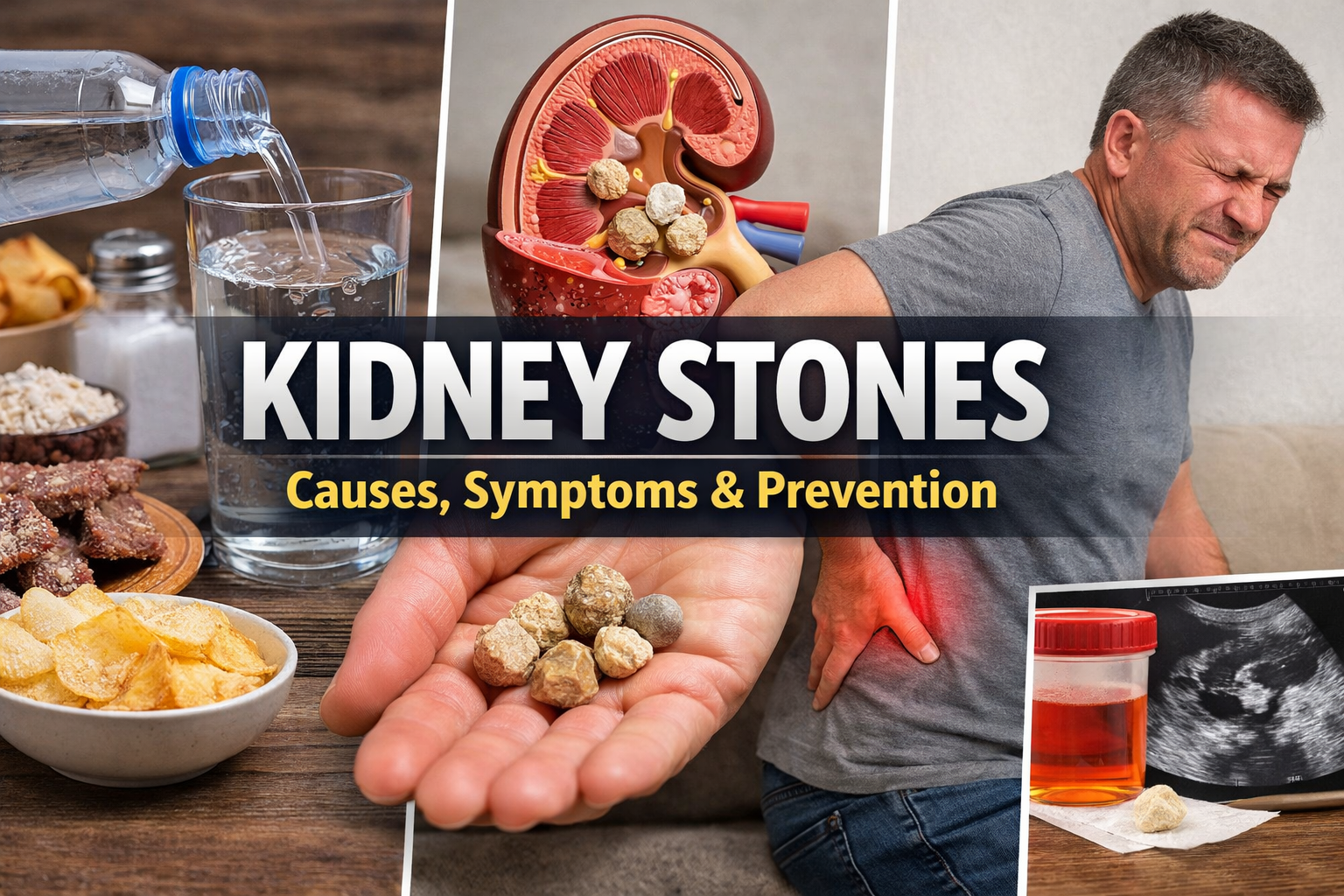
Kidney stones are common, but the experience can vary a lot from person to person. Some stones stay in the kidney and cause no symptoms at first, while others move into the urinary tract and trigger sudden, severe pain.
This article explains what kidney stones are, how they form, what increases the risk, and which warning signs should not be ignored. It is for general education only and does not replace medical care.
- Kidney stones form when minerals and salts in urine become concentrated enough to form crystals that grow into stones.
- Low fluid intake is one of the most important and most consistent risk factors.
- Diet can matter, especially high sodium intake, excess animal protein, and not getting enough calcium from food in some cases.
- Kidney stones may cause back, side, lower abdominal, or groin pain, blood in the urine, nausea, vomiting, or pain with urination. Some cause no symptoms until they move.
- Fever, chills, severe uncontrolled pain, vomiting, or difficulty passing urine need urgent medical attention.
What are kidney stones?
Kidney stones are hard, pebble-like pieces of material that form when certain substances in urine collect and crystallize. They can develop in one or both kidneys, and they vary in size from tiny grains to much larger stones.
A small stone may pass through the urinary tract without causing much trouble. A larger stone, however, can get stuck in the ureter, the tube that carries urine from the kidney to the bladder. That is when pain, blockage, and other symptoms often begin.
How do kidney stones form?
The basic process is simple: urine becomes concentrated, and minerals that are normally dissolved start to stick together. Over time, these crystals can grow into a stone.
Hydration matters because more concentrated urine gives stone-forming substances a better chance to crystallize. The exact chemistry differs by stone type, which is one reason prevention is not identical for every person.
The main types of kidney stones
Not all kidney stones are the same. Knowing the type helps guide prevention.
Calcium stones
Calcium stones are the most common type. They usually appear as calcium oxalate stones, though calcium phosphate stones also occur.
This is where many people get confused. A stone that contains calcium does not automatically mean dietary calcium is the problem. In fact, too little calcium from food can raise the risk of calcium oxalate stones in some people.
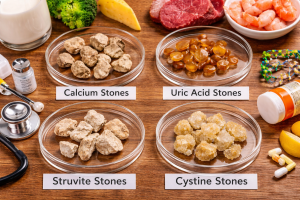
Uric acid, struvite, and cystine stones
Other main categories include:
- Uric acid stones, which are more likely when urine is too acidic.
- Struvite stones, which are often linked with urinary tract infections.
- Cystine stones, which are less common and related to a genetic condition called cystinuria.
For readers, the practical point is this: “kidney stone prevention” is not one single plan. The best prevention strategy depends partly on what the stone is made of.
 What causes kidney stones?
 What causes kidney stones?
There is rarely just one cause. Kidney stones usually happen because several factors overlap.
Dehydration and low fluid intake
Not drinking enough fluid is one of the biggest risk factors. When urine volume stays low, stone-forming substances become more concentrated.
For many people, this is the most important prevention target because it is both common and modifiable.
Diet patterns that can raise risk
Several dietary patterns can increase stone risk:
- High sodium intake can increase calcium in the urine.
- High intake of animal protein may raise risk in some people, especially when combined with other factors.
- Too little calcium from food may increase the absorption of oxalate and raise the risk of calcium oxalate stones.
- High added sugar intake may also contribute to risk.
This does not mean every person with kidney stones should avoid the same foods. It means diet should be viewed in context, not as a single “bad” ingredient.
Health conditions and personal risk factors
Some risks are less about food and more about the person’s medical background. Examples include:
- A personal or family history of kidney stones.
- Obesity and some metabolic conditions.
- Digestive diseases or surgeries that affect absorption and fluid balance.
- Conditions such as gout, hyperparathyroidism, recurrent urinary infections, or certain rare inherited disorders.
In other words, kidney stones are not just a hydration problem. They can reflect a broader mix of urine chemistry, diet, and underlying health conditions.
What do kidney stones feel like?
A kidney stone does not always hurt right away. Stones that remain in the kidney may cause no symptoms at all. Symptoms often begin when a stone moves or blocks urine flow.
Common symptoms include:
- sharp pain in the back, side, lower abdomen, or groin
- pain that comes in waves
- blood in the urine
- nausea or vomiting
- burning or pain with urination
- frequent or urgent urination
- passing only small amounts of urine at times
Pain location can change as the stone moves. A person may start with pain in the flank or lower back and later feel pain closer to the lower abdomen or groin.
When symptoms can be vague or absent
This is one reason kidney stones can be confusing. A small stone may pass with mild discomfort, while a larger obstructing stone may cause intense pain. Some people mainly notice urinary symptoms or blood in the urine rather than dramatic pain at first.
Because symptoms overlap with other urinary or abdominal conditions, persistent or unexplained symptoms still deserve medical evaluation.
What happens if kidney stones are not treated?
Not every stone needs a procedure, but ignoring a symptomatic stone is not always harmless.
Blockage and pressure buildup
If a stone blocks the ureter, urine may not drain well. That can lead to swelling in the kidney, sometimes called hydronephrosis.
Infection and possible kidney damage
The most urgent concern is infection with obstruction. Symptoms such as fever and chills along with urinary symptoms may signal a serious problem that needs prompt care.
Kidney stones rarely cause permanent damage when treated appropriately, but delayed care can increase the risk of complications.
Can kidney stones be prevented?
Many kidney stones can be reduced or prevented, though prevention is not identical for everyone. The general principles are still useful.
Stay well hydrated
Getting enough fluid is one of the most important steps. The National Kidney Foundation notes that prevention often focuses on producing a large enough urine volume each day.
Water is a sensible first choice. Other non-alcoholic fluids may also count, but the overall goal is to avoid chronically concentrated urine.
Watch sodium, protein, and overall diet pattern
Lowering excess sodium can help. Moderating animal protein may also help some people, especially those with repeated stones or certain stone types.
It is also important not to overcorrect in the wrong direction. Cutting out calcium-rich foods without medical guidance can backfire for calcium oxalate stones.
Prevention may depend on stone type
This is worth repeating because it changes the conversation. A person with uric acid stones may need a different prevention focus than someone with calcium oxalate stones or infection-related stones.
If stones recur, a clinician may recommend evaluation to understand stone composition and urinary risk factors before making a more targeted plan.
When should you see a doctor?
You should arrange medical evaluation if you think you may have had a kidney stone, especially if symptoms are new, recurring, or not improving. Blood in the urine, repeated urinary symptoms, or flank pain that keeps returning should not be ignored.
Repeat stones matter because recurrence can point to ongoing risk factors that may be preventable with the right follow-up.
When is it an emergency?
Seek urgent medical care if you have possible kidney stone symptoms plus any of the following:
- fever or chills
- severe pain that is not controlled
- persistent vomiting
- difficulty urinating or very little urine output
- signs you may have an infection
These warning signs matter because an obstructing stone with infection can become a medical emergency.
Common myths about kidney stones
Myth: “All calcium is bad for kidney stones.”
Not necessarily. Calcium stones are common, but calcium in food is not always the enemy. In some cases, too little dietary calcium can increase risk.
Myth: “Only men get kidney stones.”
Men are often highlighted in older public education materials, but kidney stones can affect adults of any sex. Risk depends on multiple factors, not sex alone.
Myth: “If the pain stops, the problem is over.”
Pain can change as the stone moves, and a decrease in pain does not automatically mean the stone has passed or that there is no blockage. Persistent symptoms still need attention.
Conclusion
Kidney stones form when substances in urine become concentrated enough to crystallize and grow. Dehydration is a major driver, but diet, stone type, personal history, and certain medical conditions also affect risk.
The most useful next steps are practical ones: stay hydrated, be careful with excess sodium, do not assume all calcium is harmful, and seek medical care if symptoms are severe, recurrent, or come with fever, chills, vomiting, or trouble passing urine.