Colon Polyps: Types, Symptoms, Causes, Risk Factors, and Screening
Colon Polyps: Types, Symptoms, Causes, Risk Factors, and Screening
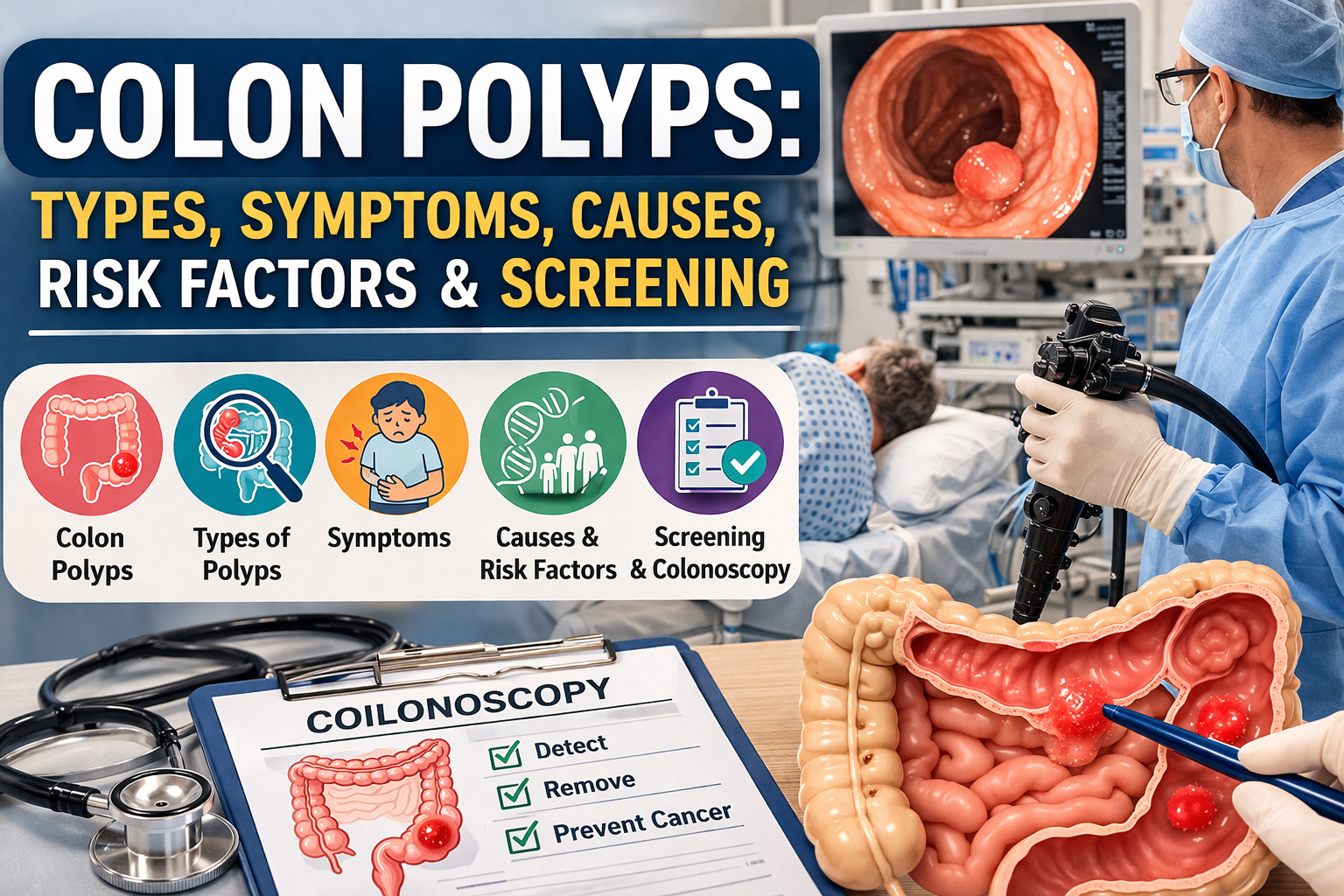
Colon polyps are growths that form on the inner lining of the colon or rectum. Many are harmless, but some can gradually become cancer over time. That is why they matter: finding and removing certain polyps can help prevent colorectal cancer before it starts.
Most people with colon polyps do not feel sick and do not notice warning signs. In many cases, polyps are discovered during routine screening rather than because of symptoms. Screening is especially important because average-risk adults are advised to begin colorectal cancer screening at age 45, and some people need to start earlier based on family history or other risk factors.
What are colon polyps?
A colon polyp is an abnormal cluster of cells that grows from the lining of the large intestine. Polyps can be tiny and flat, slightly raised, or attached to the bowel wall by a stalk. They may appear anywhere in the colon or rectum, and their size, shape, and cell pattern help doctors estimate whether they are low risk or more concerning.
Not every polyp turns into cancer. Still, colorectal cancer often begins as a polyp, which is why removal is such an effective prevention strategy. Doctors usually find polyps during colonoscopy, then remove them and send them to a lab to learn exactly what type they are.
Why colon polyps matter
The biggest reason colon polyps deserve attention is that some are precancerous. In general, the higher-risk polyps are those with certain cell changes, larger size, or more advanced features under the microscope. When these growths are removed early, the pathway toward colorectal cancer can often be interrupted.
This is also why a normal colonoscopy and a colonoscopy that finds polyps are managed differently. Someone with no concerning findings may not need another colonoscopy for years, while someone with higher-risk polyps may need closer follow-up.
Main types of colon polyps
Adenomatous polyps
Adenomatous polyps, often called adenomas, are the type doctors pay closest attention to because they can develop into colorectal cancer over time. They are considered precancerous, though not every adenoma becomes cancer. Risk tends to be higher when the polyp is larger, when there are several polyps, or when pathology shows more advanced changes.
Adenomas are commonly grouped into:
- tubular adenomas
- villous adenomas
- tubulovillous adenomas
These subtypes differ in appearance under the microscope, and some carry more concern than others.
Hyperplastic polyps
Hyperplastic polyps are often small and usually have a very low risk of becoming cancer, especially when they are found in the lower colon or rectum. Even so, context matters. Larger or differently located serrated lesions may deserve closer attention than the word “hyperplastic” alone might suggest.
Sessile serrated polyps
Sessile serrated polyps, also called sessile serrated lesions, can be easy to miss because they are often flat and subtle. They are important because some can be part of a pathway that leads to colorectal cancer, particularly if they are large or show dysplasia.
Traditional serrated adenomas
Traditional serrated adenomas are less common, but they are considered clinically important because of their neoplastic potential. When found, they typically require the same careful follow-up mindset as other concerning precancerous polyps.
Inflammatory polyps
Inflammatory polyps are usually linked with ongoing inflammation in the bowel, such as inflammatory bowel disease. These polyps themselves are not usually the main cancer concern, but the underlying inflammatory condition can raise colorectal cancer risk over time.
Do colon polyps cause symptoms?
Often, no. Many colon polyps cause no symptoms at all. That is one reason routine screening matters so much: a person can feel completely fine and still have a growth that needs to be removed.
When symptoms do happen, they may include:
Blood in the stool or rectal bleeding
Bleeding may be bright red or darker, depending on where it comes from. Blood in the stool can happen with polyps, but it can also be caused by hemorrhoids, anal fissures, inflammation, or colorectal cancer, so it should not be ignored.
Changes in bowel habits
A larger polyp may contribute to ongoing constipation, diarrhea, or a change in stool pattern. A persistent change that lasts more than a few weeks deserves medical attention.
Belly pain, cramping, or bloating
Some people with bigger polyps may develop abdominal discomfort, especially if the growth affects how stool moves through the colon. Severe pain or signs of blockage need urgent evaluation.
Iron-deficiency anemia
Small amounts of ongoing bleeding may not be visible but can still lead to iron-deficiency anemia over time. Fatigue, weakness, shortness of breath, or looking pale can be clues.
Unexplained weight loss
Weight loss is not a typical early symptom of a small polyp, but it should always be evaluated, especially when it occurs with bleeding, bowel changes, or abdominal pain.
Colon polyp risk factors
Age
Risk rises with age. Most colon polyps are found in adults 45 and older, which is one reason routine screening starts at 45 for average-risk adults.
Family history
Having a parent, sibling, or child with advanced polyps or colorectal cancer raises your risk. A strong family history may mean earlier or more frequent screening.
Personal history of polyps
If you have had adenomatous polyps before, your chance of developing future polyps is higher than average. That is why surveillance colonoscopy matters.
Hereditary syndromes
Some inherited conditions dramatically increase risk, including familial adenomatous polyposis and Lynch syndrome. These syndromes often require screening well before age 45.
Inflammatory bowel disease
Long-term ulcerative colitis or Crohn’s disease involving the colon can raise colorectal cancer risk and may change how often screening is needed.
Lifestyle factors
Smoking, heavy alcohol use, excess body weight, physical inactivity, and diets high in processed meat and red meat are linked with a higher colorectal cancer burden. Diets richer in fiber, fruits, vegetables, and whole foods may help lower risk.
Can you lower your risk?
You cannot change your age or genetics, but there are practical steps that may support colon health and reduce risk.
Eat a more fiber-rich diet
Research cited by NIDDK suggests that eating more fruits, vegetables, and other foods with fiber may lower the chances of developing colon polyps.
Maintain a healthy weight
Excess body weight is tied to a greater colorectal cancer burden, so weight management is an important long-term prevention step.
Move regularly
Physical inactivity is a known modifiable risk factor. Consistent exercise supports digestive and metabolic health and is part of an overall prevention-focused lifestyle.
Limit smoking and alcohol
Smoking and higher alcohol intake are both linked with colorectal cancer risk. Cutting back or quitting can improve more than just colon health.
Keep up with screening
Lifestyle changes help, but they do not replace screening. Screening is what actually finds polyps before they become dangerous.
How colon polyps are found
Colonoscopy
Colonoscopy is the most complete test because it allows the doctor to see the colon and remove many polyps during the same procedure. For that reason, it remains a key screening and prevention tool.
Stool-based tests
Tests such as FIT and multitarget stool DNA can help detect signs of colorectal cancer or advanced lesions, but a positive result usually needs follow-up colonoscopy.
Flexible sigmoidoscopy
This test looks at the rectum and lower colon, not the entire colon. It can find polyps in that area but will miss those farther upstream.
CT colonography
CT colonography can visualize the colon, but if it detects a suspicious lesion, a standard colonoscopy is still needed to remove or biopsy it.
When should screening start?
For people at average risk, major U.S. guidance recommends starting colorectal cancer screening at age 45. Adults ages 45 to 75 are generally advised to be screened, while decisions from 76 to 85 are more individualized based on health status and previous screening history. People with higher risk may need screening sooner and more often.
When to see a doctor
Make an appointment promptly if you have:
- rectal bleeding or blood in your stool
- a lasting change in bowel habits
- new or ongoing abdominal pain
- unexplained iron-deficiency anemia
- unexplained weight loss
- a strong family history of colon polyps or colorectal cancer
Even without symptoms, talk to your doctor if you are 45 or older and have not started screening, or if you have a personal or family history that may place you in a higher-risk group.
Colon polyps are common, often silent, and important because some can become colorectal cancer over time. The good news is that they can often be found early and removed before they cause serious harm. Knowing your risk factors, paying attention to symptoms, and staying on schedule with screening are the most effective ways to protect your long-term colon health.